
The Rural Guaranteed Minimum Income Initiative has three primary goals:
- Help lift rural Americans out of poverty with direct cash payments over the course of 16 months.
- Study the process of the GMI programs, so that the GMI playbook can be improved and repeated, for more people, in many more counties, over decades to come.
- Ensure we produce valid scientific data, which we will share with the entire world via https://ubidata.io.
This is our first update on the science part.
As with any rigorous research effort, what we see day-to-day never tells the whole story. People’s lives change over time, and those changes don’t move linearly. It’s only by looking over the long term, and listening to and analyzing experiences as they unfold, that broader patterns and meaning can come into view.
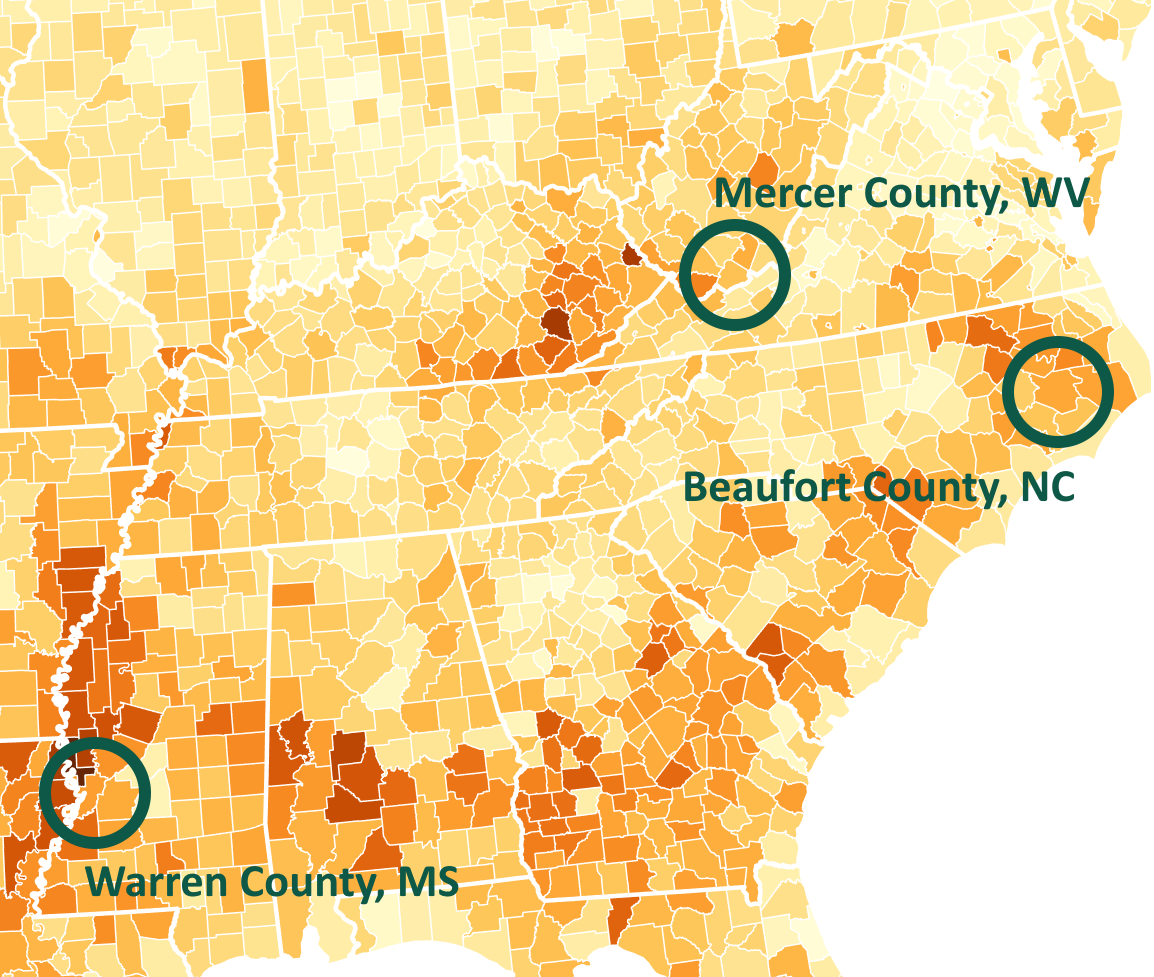
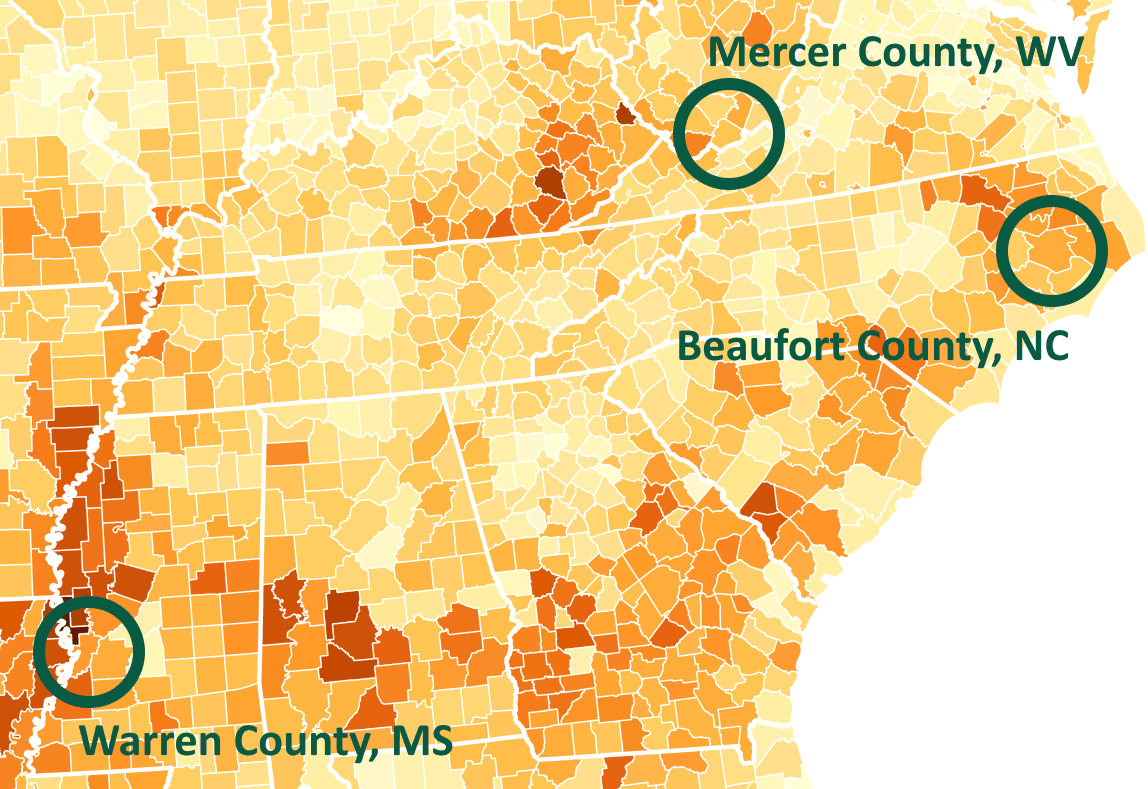
Residents of our first group of three rural American counties with income less than 200% of the federal poverty line were invited to volunteer for the program, with a lottery to determine final eligibility. Participants could also optionally volunteer to share how they used their GMI funds as part of an accompanying study, so that we can work together as a team to improve the program, for them, and for everyone else.
Mercer County, WV
Beaufort County, NC
Warren County, MS
Mercer County, West Virginia
Since the launch in October 2025, Mercer County filled all of the 562 available enrollment slots. Of those, 500 participants (89%) consented to be part of the study. Those 500 were sent a “baseline survey” to assess their current economic, social, emotional, and community health and 499 (99%) completed it. These surveys will be compared with voluntarily provided follow-up surveys, to document participants' experiences and circumstances over the study period.
Beaufort County, North Carolina
Since the launch in November 2025, Beaufort County filled 100% of the 559 available enrollment slots. 487 participants (87%) consented to be included in the research study, and 98% of the study participants have completed the baseline survey.
Warren County, Mississippi
Since December 2025, Warren County filled 559 (100%) of its enrollment slots. 89% of them, 496, are participating in the research, and 98% of those have completed the baseline survey.
These are remarkable numbers.
In order to be proper science, there’s no requirement to participate in the study in exchange for GMI money; there is no “quid pro quo”; there can’t be. But of the 1,680 people in this first RGMII project, 1,483 — almost 90 percent — are fully engaged in the study with us. Together, we can build a detailed picture of how people navigate a period with a guaranteed minimum income, and by their sheer numbers, learn about these three diverse and varied counties. Which will, in turn, inform the next group of three counties.
No study can be labeled a success until it’s complete. But we feel confident in calling this — in scientific terms — one hell of a start.
This post was updated on March 6, 2026 to reflect the latest participation numbers as of that date.