Press




Jan 2025
Stay Gold, America
Jan 7 — Coding Horror Blog
 Jeff Atwood
The American Dream is slipping away for too many people as housing, healthcare, and education costs soar in a democracy that does not properly represent all of its citizens — along with historic levels of wealth concentration. I went from a poor childhood and minimum‑wage college years to wealth through Stack Overflow and Discourse, so my family made eight immediate $1 million donations and committed half our remaining wealth over the next five years toward larger, longer-term efforts to keep the American Dream attainable for everyone.
A New Giving Pledge? Tech Mogul Promises Accelerated Donations
Jan 16 — The Chronicle of Philanthropy

After Stack Overflow sold for $1.8 billion in 2021, Atwood ended up with roughly $100 million after tax. He says the timing was largely luck and feels a strong responsibility to use that money to help others. Inspired by MacKenzie Scott and critical of the traditional, slow‑moving Giving Pledge model, Atwood wants to move money faster and with fewer strings attached.
Atwood acknowledges he’s still learning about philanthropy and “kind of winging it,” but he hopes that by speaking publicly about his plans, he can encourage other wealthy tech figures to act with more urgency.
Tech Boss Jeff Atwood To Give Away Half of Fortune for 'The American Dream'
Jan 17 — Newsweek
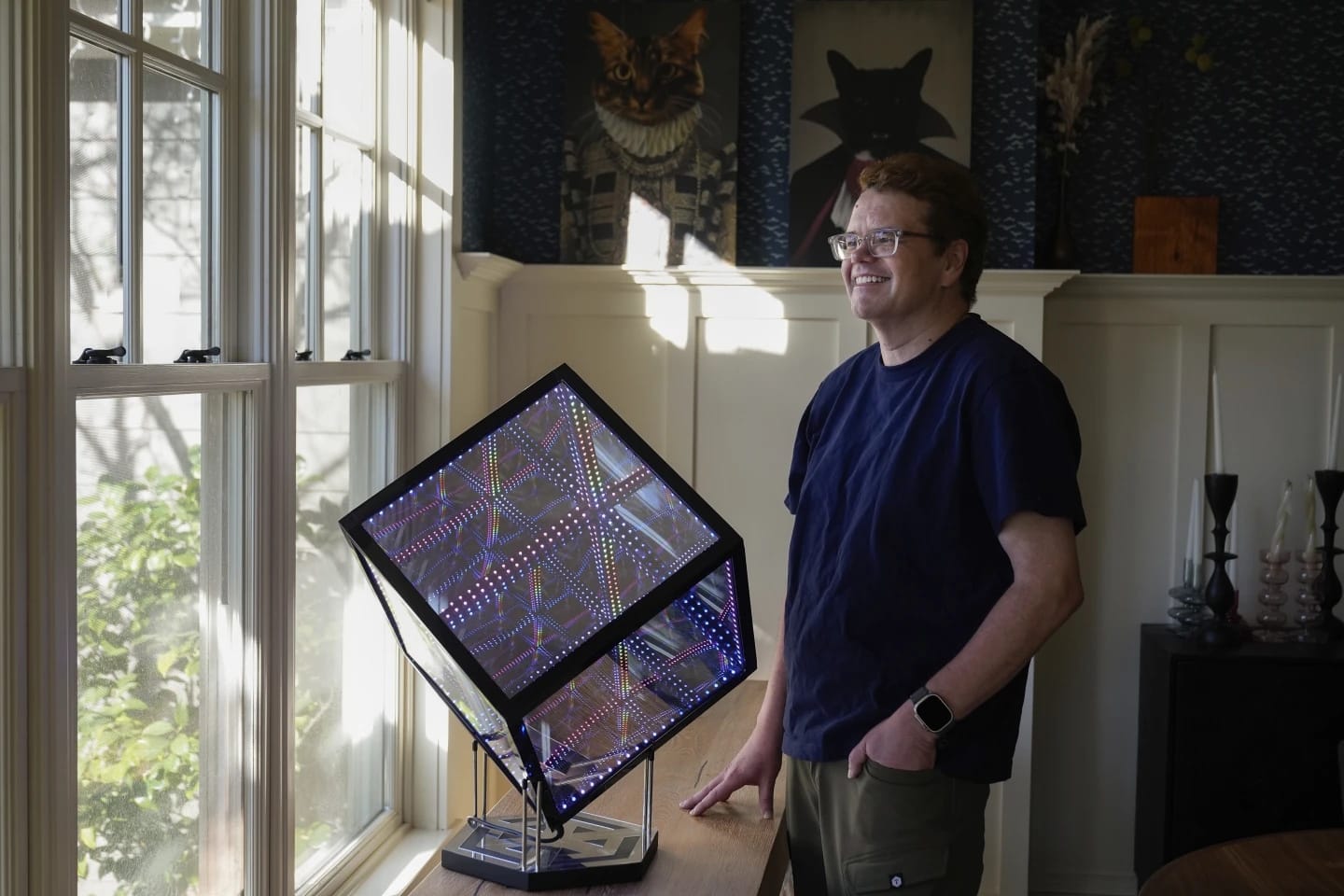
“The American dream isn't about just getting rich. It's about everyone succeeding,” he said during an interview with The Associated Press this week. Atwood argues that growing wealth inequality is eroding faith in the American dream—the idea that hard work and a bit of luck can lead to success and prosperity.
Tech Founder Pledges to Give Away Half His Wealth to Make the American Dream More Possible
Jan 17 — U.S. News & World Report
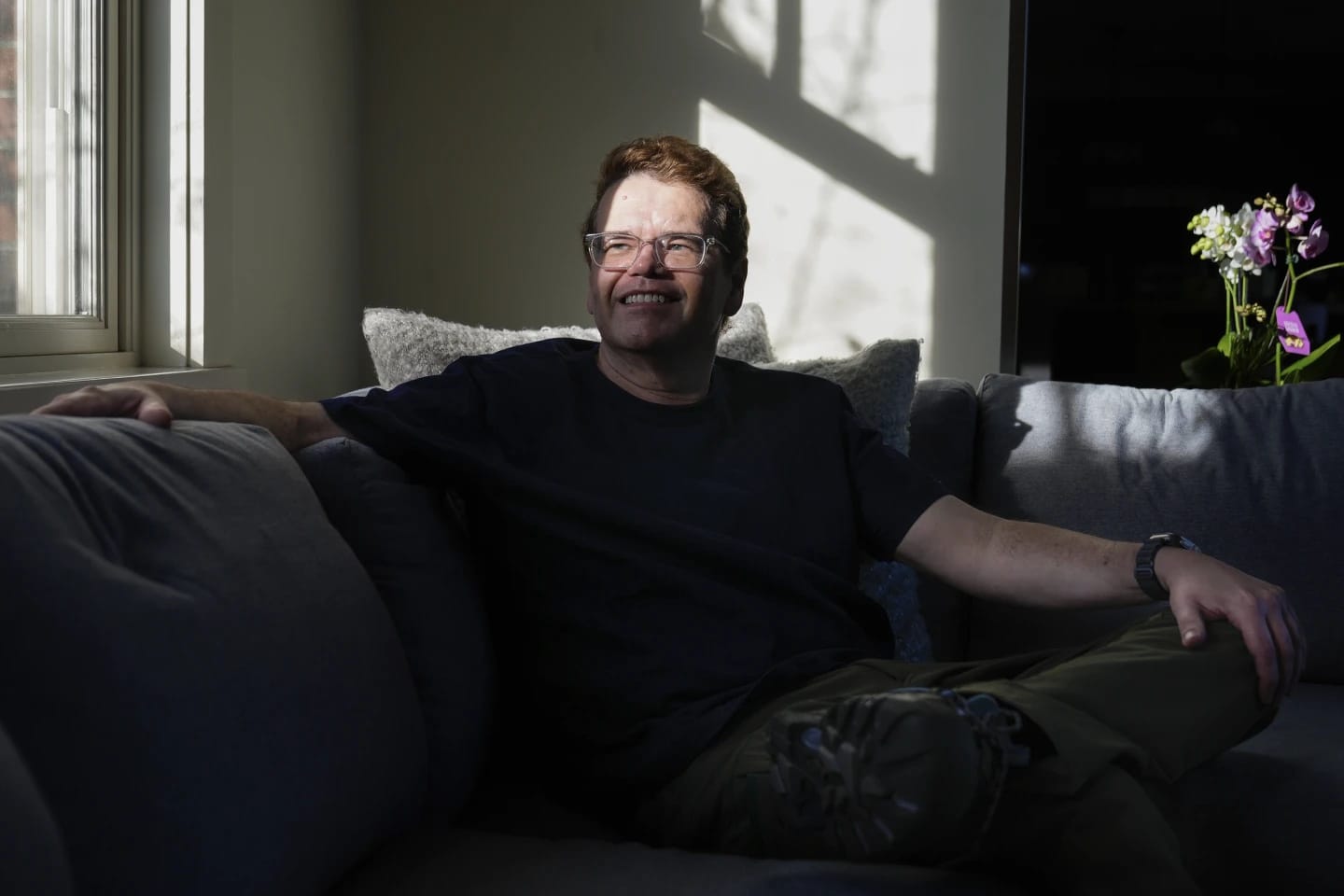
Unfair. Astonishing. Un-American. That is how tech entrepreneur Jeff Atwood sees the staggering wealth inequality in the U.S. today. In response, he and his family have pledged to give away half their wealth within five years, starting with $1 million gifts to eight nonprofits this month.
A $1.8B startup sale made him wealthy—now he plans to donate half his net worth: ‘The American Dream isn’t just about getting rich’
Jan 18 — CNBC
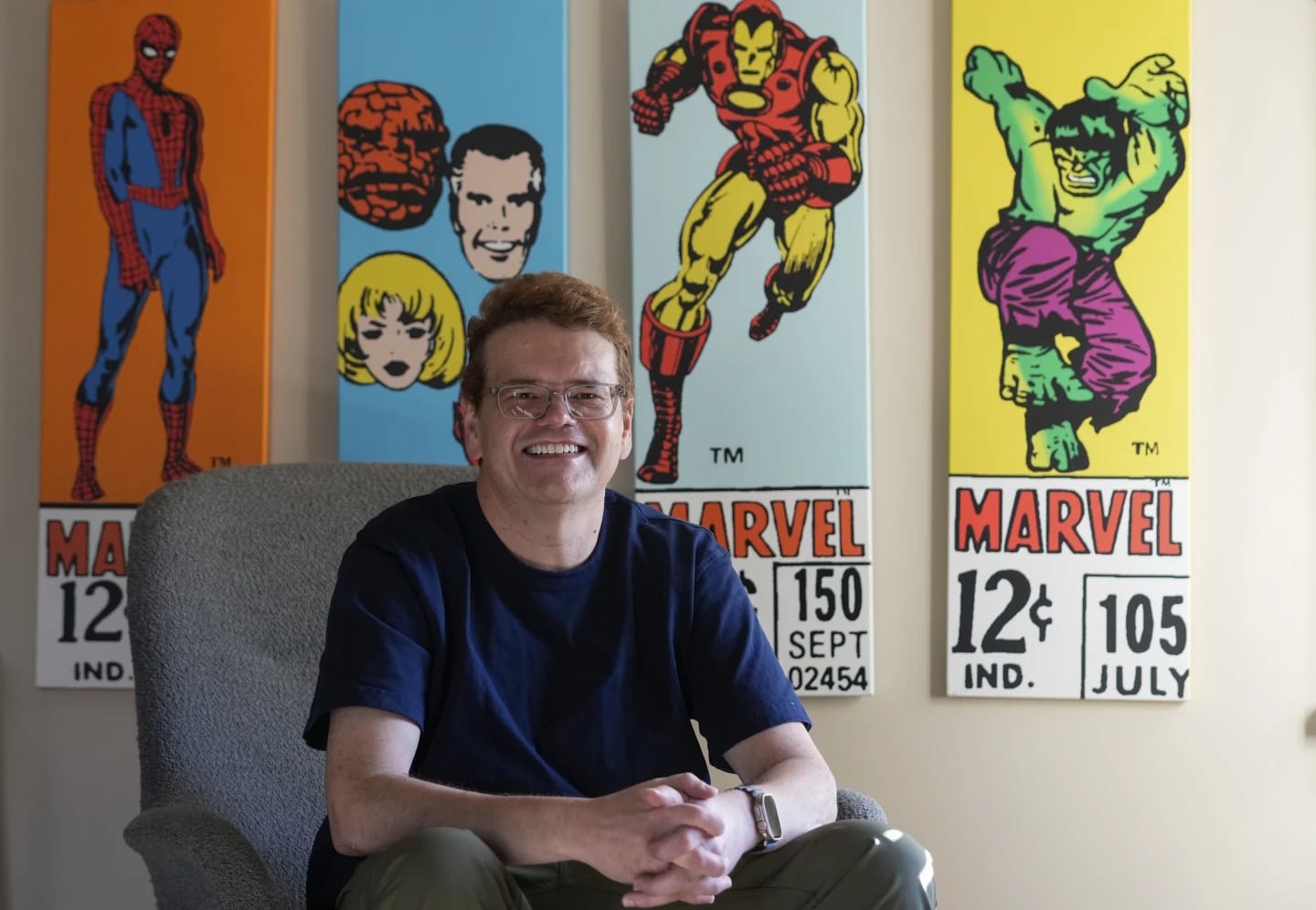
Plenty of wealthy people plan to donate most of their fortunes to philanthropic causes. Jeff Atwood says he’ll actually do it within the next five years. Atwood, the co-founder of computer programing platform Stack Overflow — which was acquired by global investment group Prosus for $1.8 billion in 2021 — plans to give away more than half his wealth within the next five years.
Feb 2025
I'm giving away half my wealth to make the American Dream possible – ask me anything
Feb 1 — Reddit


Tech Multimillionaire, UVA Grad, Pledges To Give Away Half His Wealth
Feb 12 — UVA Today
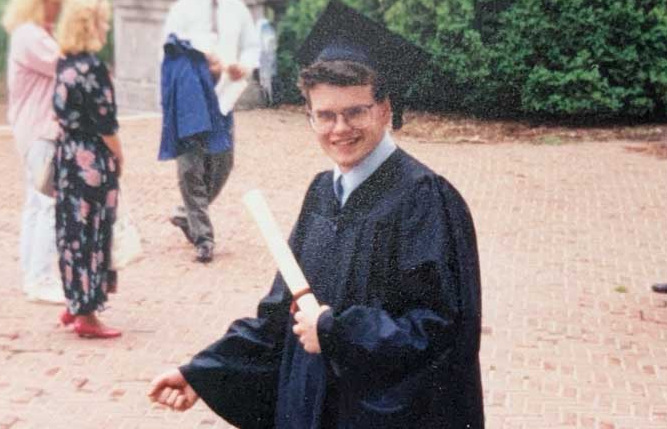
The 1992 graduate, an only child, arrived at UVA in 1988. Both his parents came from “dirt poor rural backgrounds in North Carolina and West Virginia,” he said. The family paid his UVA tuition with a combination of savings, a Pell Grant and the money Atwood earned working as a cashier at Safeway and in the summer for a painting business.
Mar 2025
Let's Talk About The American Dream
Mar 6 — Coding Horror Blog
 Jeff Atwood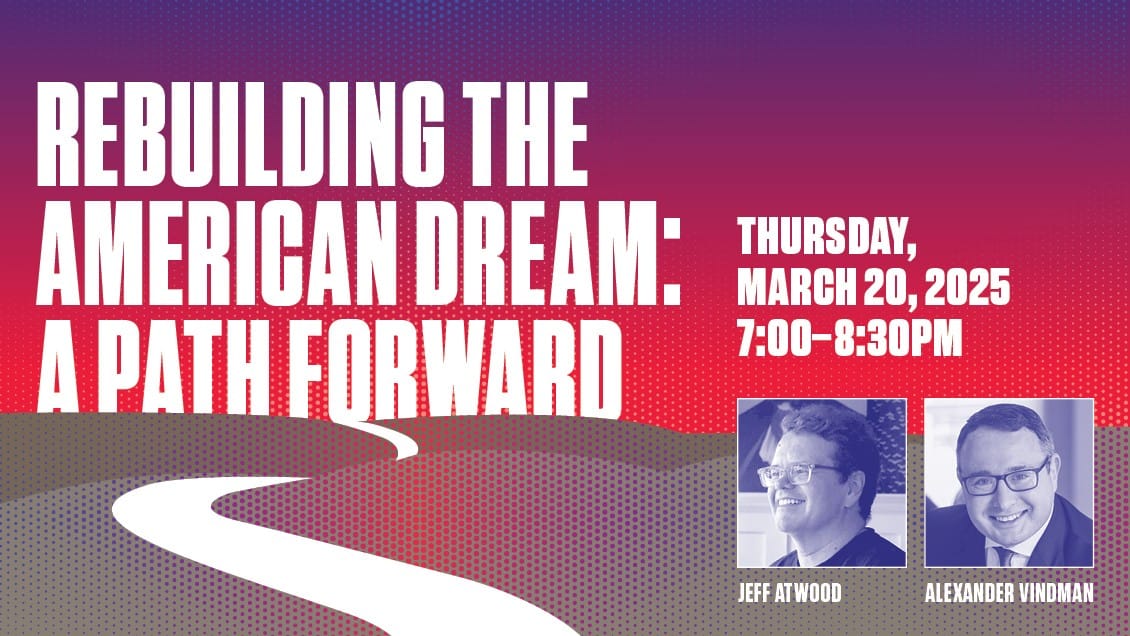
The Road Not Taken is Guaranteed Minimum Income
Mar 20, 2025 — Coding Horror Blog
 Jeff Atwood
Apr 2025
From Code To Cash: Stack Overflow Co-Founder Jeff Atwood's Unorthodox Path To Philanthropy
Apr 25 — Forbes
 Aisha Nyandoro, Ph.D.
Jeff Atwood’s philanthropic strategy focuses on giving away half his wealth—around $50 million—within five years through large, no-strings-attached donations. Motivated by rising inequality, he supports guaranteed income pilots in rural areas tied to his family roots and favors fast, trust-based giving over traditional slow philanthropy, aiming to make an immediate impact and inspire others to do the same.
May 2025
TIME100 Philanthropy 2025
May 20 — Time Magazine

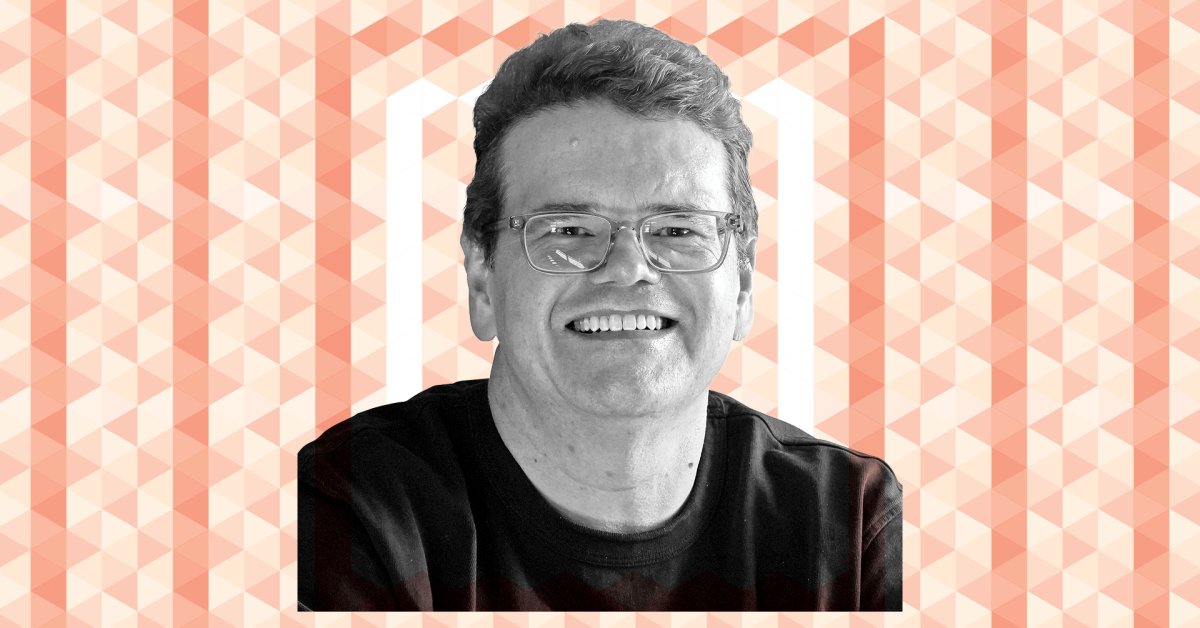
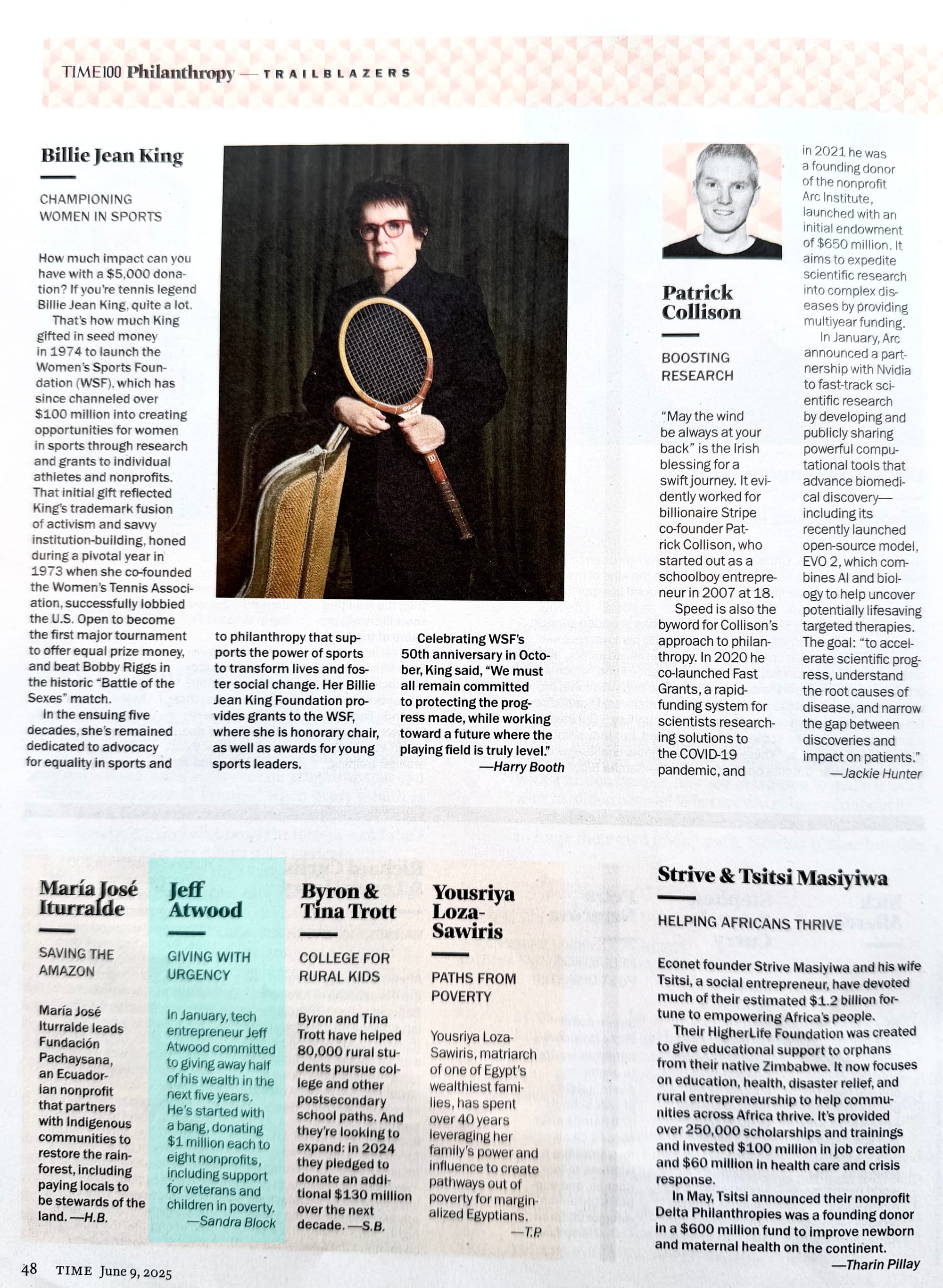
Jeff Atwood
Giving With Urgency
(web content was shortened for print)
Nearly 250 wealthy philanthropists have signed the Giving Pledge, promising to donate at least half of their fortunes during their lifetimes or upon their death. Jeff Atwood (who’s not a signatory) is doing them one better.
Atwood, whose computer programming platform Stack Overflow was acquired by a global investment group for $1.8 billion in 2021, committed in a blog post this January to giving away half of his wealth in the next five years. And he’s already started with a bang, contributing $1 million each to eight nonprofits this year, from the Children’s Hunger Fund, which provides resources to local churches, to Team Rubicon, which mobilizes veterans to help Americans recover from natural disasters.
Atwood’s drive to give back stems from his own background, growing up poor and financing his college education through a combination of Pell grants, scholarships, and a minimum-wage job as a cashier. His next giving goal: to work with churches, community organizations and veterans groups to make direct cash payments to residents of poor counties in West Virginia, North Carolina, and Arizona. Studies have shown, he says, that this is one of the most effective ways to lift people out of poverty.
“It’s not a handout,” he says. “It’s an investment in our fellow Americans.”
Jun 2025
Denver Frederick Interview and Podcast
Jun 24 — The Business of Giving
 Denver Frederick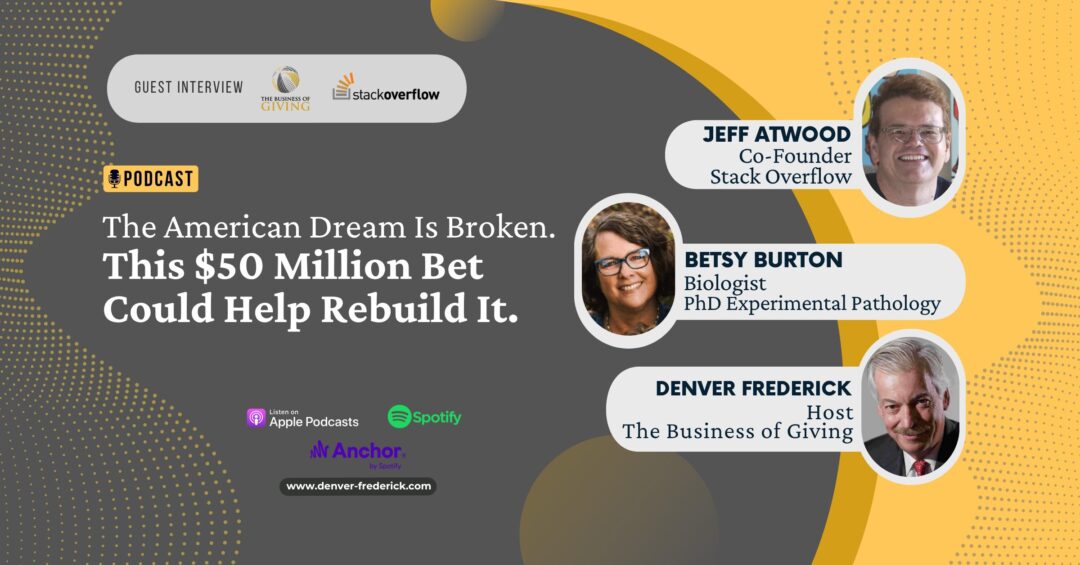
Denver: Betsy, with your remarkable background in biology, you guys are now raising three kids there, and you’re really the heartbeat of this mission, I think. How have your children sparked your passion for guaranteed minimum income, GMI pilots in rural counties across the country?
Betsy: Raising kids obviously has many challenges, and one is: How do you raise your kids to… obviously we’re very comfortable and have been since they were born, and they would have questions like... “Are we rich?”
Thinking about how to answer those questions... “Well, we have everything we need!” That’s how I’ve always phrased it to them. That, I think, extends out into our GMI stuff. We have everything we need; how do we make sure everybody has what they need? Because that’s the basic thing — Do you have a comfortable place to live? Do you have enough to eat? Do you have healthcare? If you have the basics, you’re in a good place in life, and everybody should have that opportunity.
Read the transcript / listen to the podcast
Oct 2025
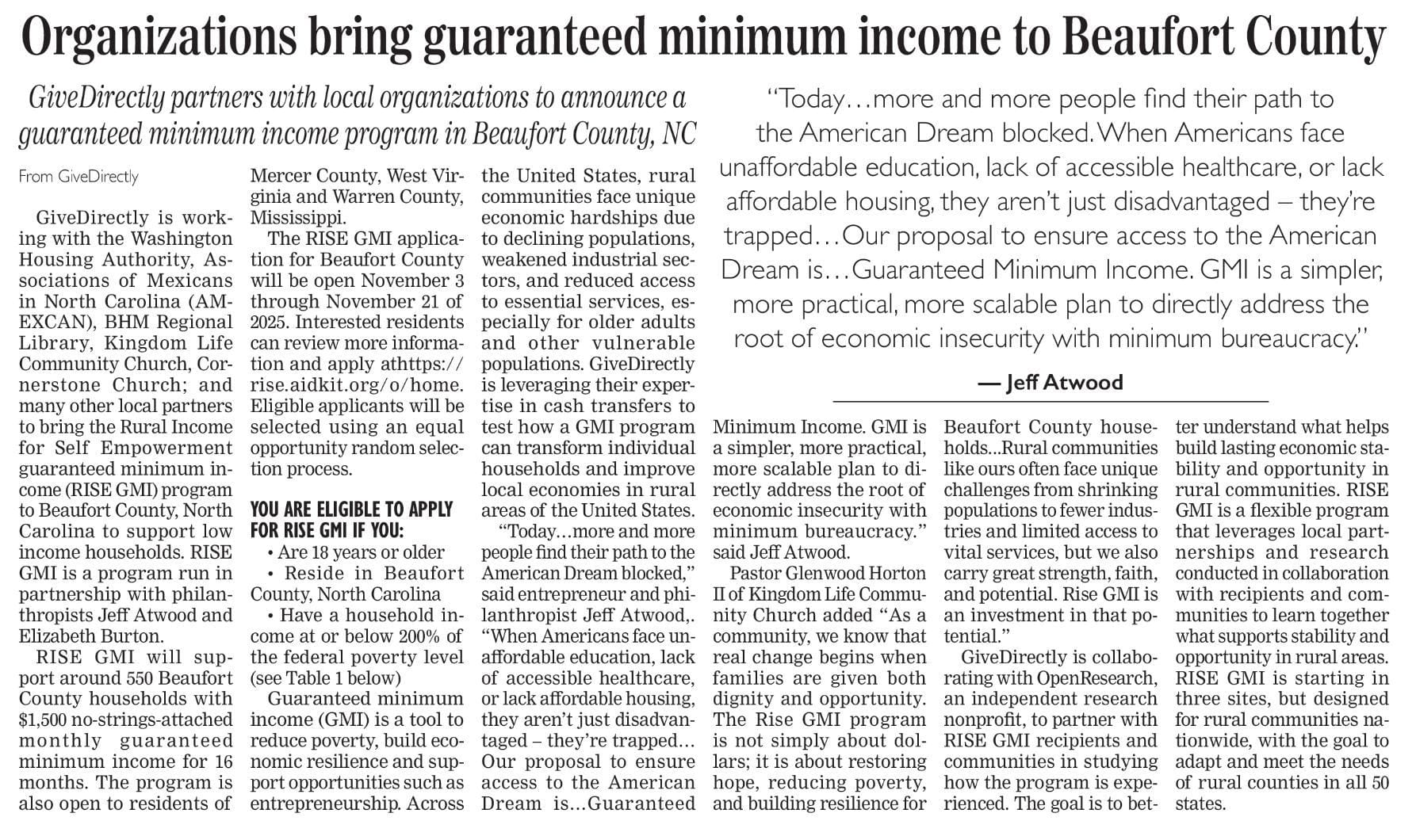
Organizations bring guaranteed minimum income to Beaufort County
Oct 11 — The Washington Daily News — Page 2A
Multi-Million Dollar Aid Program Brings Hope to Mercer County
Oct 29 — WV Public Broadcasting
 Maria Young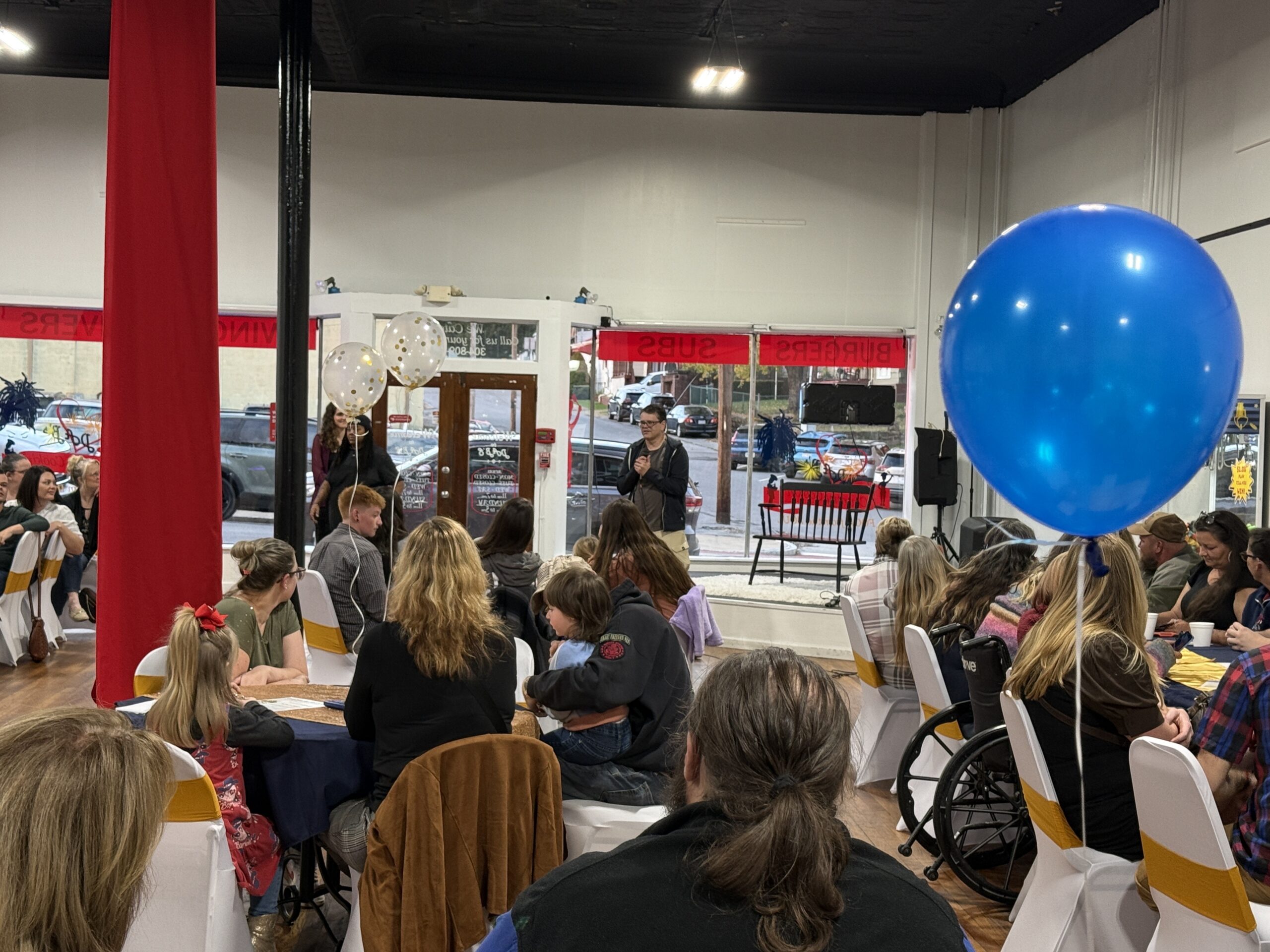
Nov 2025
Deadline Nears for RISE program
Nov 15 — The Washington Daily News

$1,500 monthly payments available to low-income Warren County households
Nov 15 — Vicksburg Post
 Staff ReportsThe Vicksburg Post
Spurred to Action: The Inspirational Impact of MacKenzie Scott's Big Gifts
Nov 5 at 9:30am — Center for Effective Philanthropy Conference
When MacKenzie Scott began giving large, unrestricted gifts in 2020 with the aim of donating the majority of her wealth, she made waves. Her approach of giving substantial, unrestricted grants with no restrictions and few or no reporting requirements was novel, and shocked the philanthropic and nonprofit worlds. It inspired the Center for Effective Philanthropy to embark on a three-year study examining the impact of these gifts — and inspired other large-scale donors to give similarly. This session will include a major donor family influenced by Scott [Jeff Atwood and Betsy Burton], a foundation that was inspired by her model [Skyline Foundation, Angie Chen], and a Scott grantee [UpTogether, Jesús Gerena]. Audience members are encouraged to ask their nitty-gritty questions about the how, what, and why of their approaches.
Read the CEP study on MacKenzie Scott's Big Gifts
The Chronicle of Philanthropy
Nov/Dec Edition — What's Next? Predictions for 2026
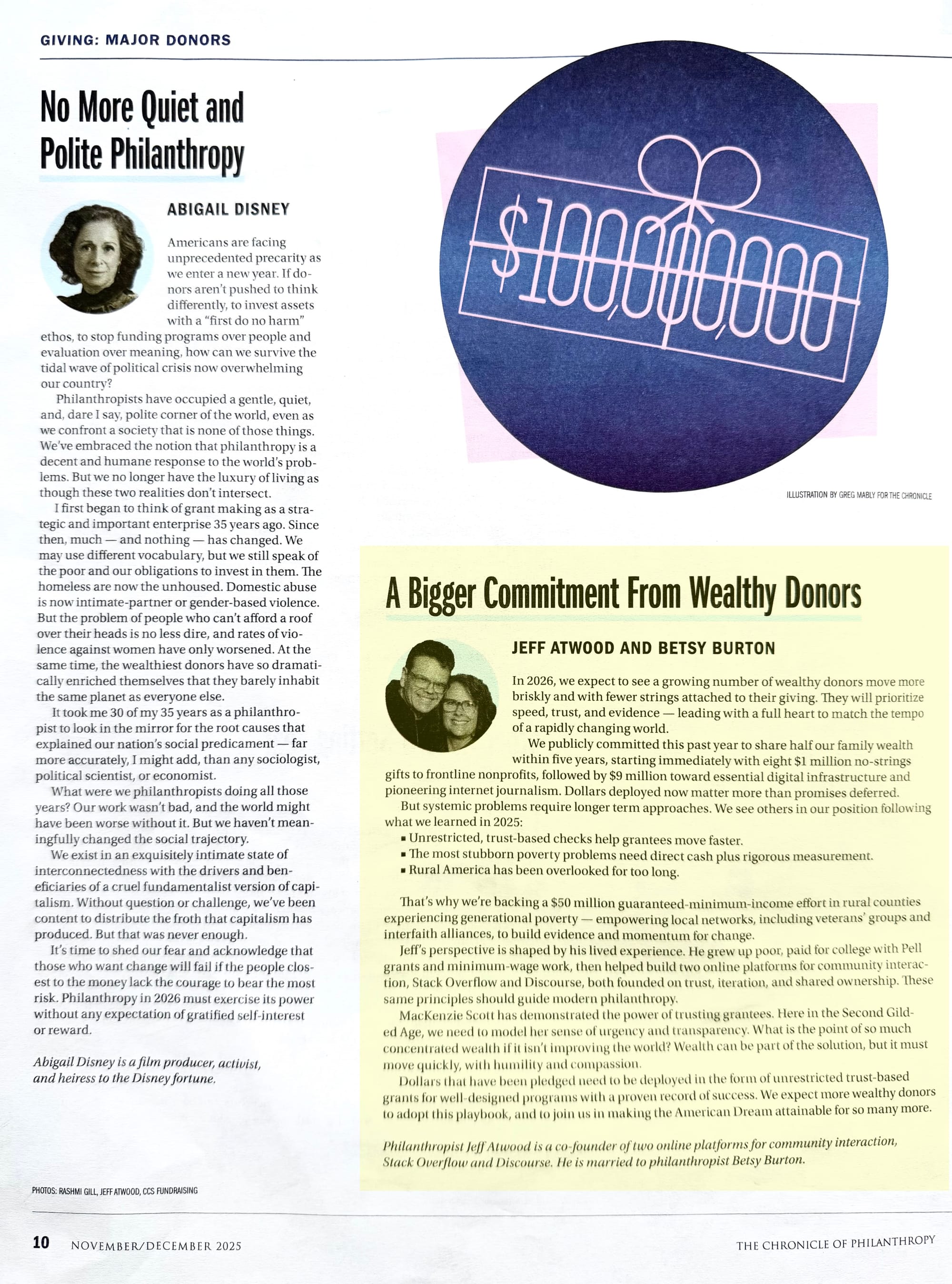
A Bigger Commitment From Wealthy Donors
Jeff Atwood and Betsy Burton
In 2026, we expect to see a growing number of wealthy donors move more briskly and with fewer strings attached to their giving. They will prioritize speed, trust, and evidence — leading with a full heart to match the tempo of a rapidly changing world.
We publicly committed this past year to share half our family wealth within five years, starting immediately with eight $1 million no‑strings gifts to frontline nonprofits, followed by $9 million toward essential digital infrastructure and pioneering internet journalism. Dollars deployed now matter more than promises deferred.
But systemic problems require longer-term approaches. We see others in our position following what we learned in 2025:
- Unrestricted, trust‑based checks help grantees move faster
- The most stubborn poverty problems need direct cash plus rigorous measurement
- Rural America has been overlooked for too long
That’s why we’re backing a $50 million guaranteed minimum income effort in rural counties experiencing generational poverty — empowering local networks, including veterans’ groups and interfaith alliances, to build evidence and momentum for change.
Jeff’s perspective is shaped by his lived experience. He grew up poor, paid for college with Pell grants and minimum‑wage work, then helped build two online platforms for community interaction, Stack Overflow and Discourse, both founded on trust, iteration, and shared ownership. These same principles should guide modern philanthropy.
MacKenzie Scott has demonstrated the power of trusting grantees. Here in the Second Gilded Age, we need to model her sense of urgency and transparency. What is the point of so much concentrated wealth if it isn’t improving the world? Wealth can be part of the solution, but it must move quickly, with humility and compassion.
Dollars that have been pledged need to be deployed in the form of unrestricted trust-based grants for well-designed programs with a proven record of success. We expect more wealthy donors to adopt this playbook, and to join us in making the American Dream attainable for so many more.
Feb 2026
Tech's Gilded Age
Feb 25 – Intelligent Machines 859, TWiT.TV


"You're giving people reliable, consistent income... you don't have to sleep on the street. You can actually feed yourself. And now you have time to think about education, you know, fixing your busted car, whatever you need to get to the next level. You think people want to be stuck in poverty? Really?
Listen to or watch the episode