


Start one conversation
Contact one representative
Rural communities don’t need charity — they need room to breathe, plan, and build. Guaranteed minimum income (GMI) provides that room:
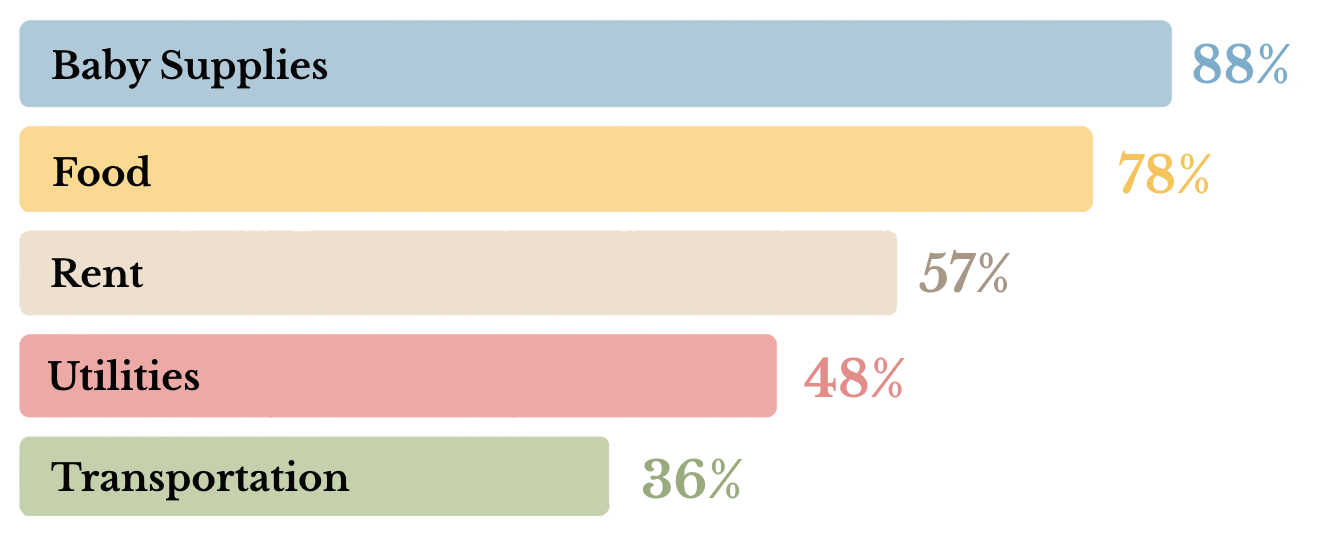
- In Michigan, new mothers used cash payments for baby supplies, food, and rent.
- In Texas, participants used support to pursue education and start new businesses.
- In Georgia, direct cash payments went to utilities, housing payments, and rainy-day funds.
The Rural Guaranteed Minimum Income Initiative is working to bring that same kind of stability to rural counties, and public support — your support — helps us make that possible.
Income Stability Matters
When your income is unpredictable, every decision becomes harder. A car repair can make it difficult to pay rent. A medical bill can derail a semester. A bad month turns into a bad year. Guaranteed Minimum Income creates a dependable financial baseline for families who need it the most.
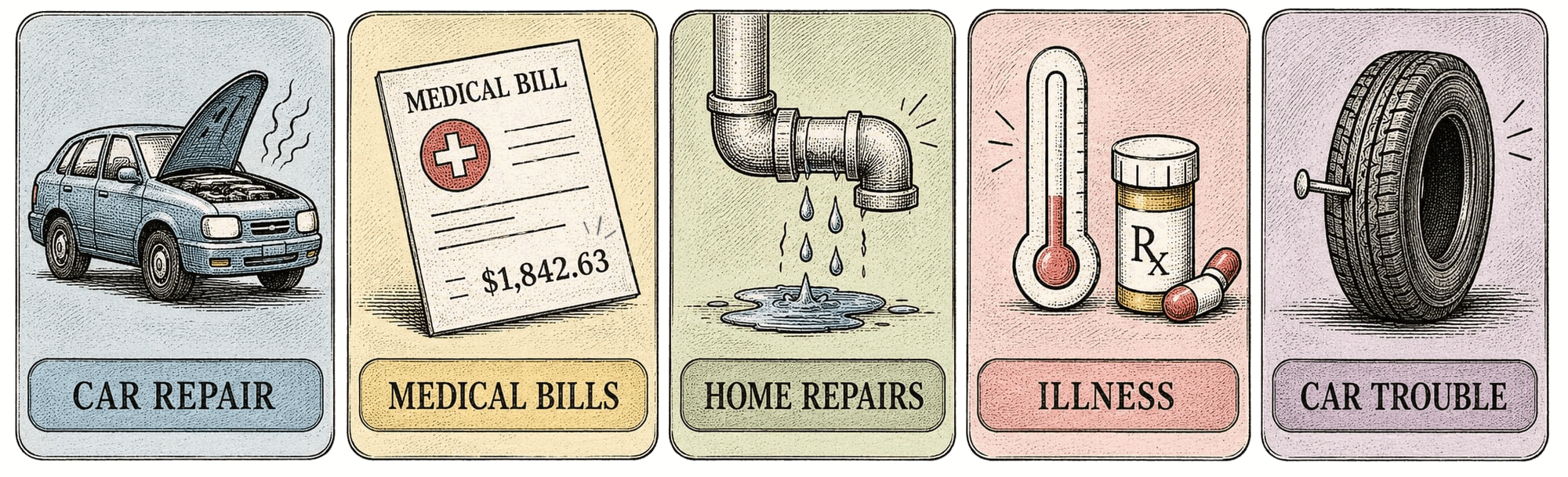
In rural communities, income stability is even more challenging. There are fewer nearby jobs, longer travel distances, less social infrastructure, and less savings to rely on. Guaranteed Minimum Income provides families more and better options to stay housed, keep working, and care for their children.
We chose GMI because one unexpected expense should not make the American Dream unreachable. A reliable source of income for a fixed period of time isn’t just short term relief; it enables families to build a better foundation for their lives — to eat healthier food, to spend more time with their families, to choose better work options, to get education or training, to take care of a sick family member, or the chance to start a small business.
Rural counties are made up of people who want the same thing all Americans do: to work, contribute, and to raise families ... while remaining rooted in the values of their own communities.
How you can help

Start by learning the basics:
- Learn about Guaranteed Minimum Income (GMI)
- See recent GMI study results
- Use the FAQ to prepare for common questions
Then, spread the word! You might meet someone who is hearing about GMI or universal basic income (UBI) for the first time. Simply letting people know that such programs exist, that they are successful — and have been for decades — is a great start.
If people seem interested, share articles, results, and success stories online wherever you are, and with people you know:
- Family and Friends
- Neighbors
- Community or Faith-Based Groups
- Civic Organizations, or Volunteer-Focused Clubs such as Rotary International and Lion’s Clubs
- Local Town Halls, Library Discussion or Debate Groups, and Community Foundation Events
- Online Spaces you regularly participate in, such as Neighborhood Groups, Alumni Forums or Associations, or more topic-focused communities, such as Reddit.
If they ask questions, that’s great! It means they’re interested.
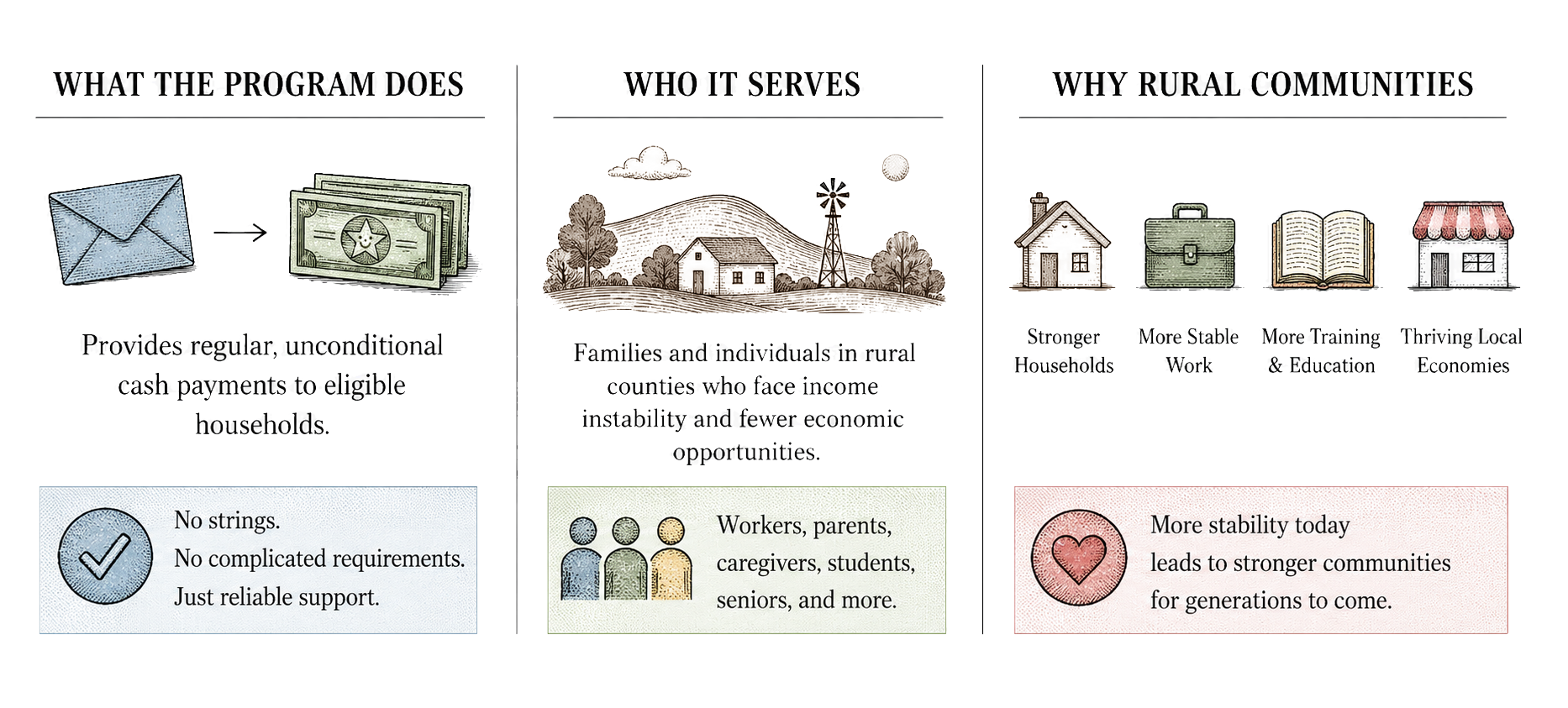
Common questions tend to be:
- Does a program like this discourage work or create dependency? (It doesn’t.)
- Can cash support be trusted, will families use it well? (They will.)
- Doesn't deciding who qualifies get complicated? (It doesn’t have to.)
GMI removes economic instability, not responsibility. Direct cash models are built on trust — the idea that all families want the same things we all want, and they love their children just as much as we do. The data consistently shows that folks make sound, responsible decisions about rent, food, transportation, child care, education, and emergencies when they have the resources they need.
You can also help by speaking with elected officials. Public leaders, especially at the State level, need to hear from the people they represent who want this initiative to grow. Do not assume they already understand the pressures rural families face. Call, write, or meet with your representatives and ask them to take direct cash transfer programs seriously.
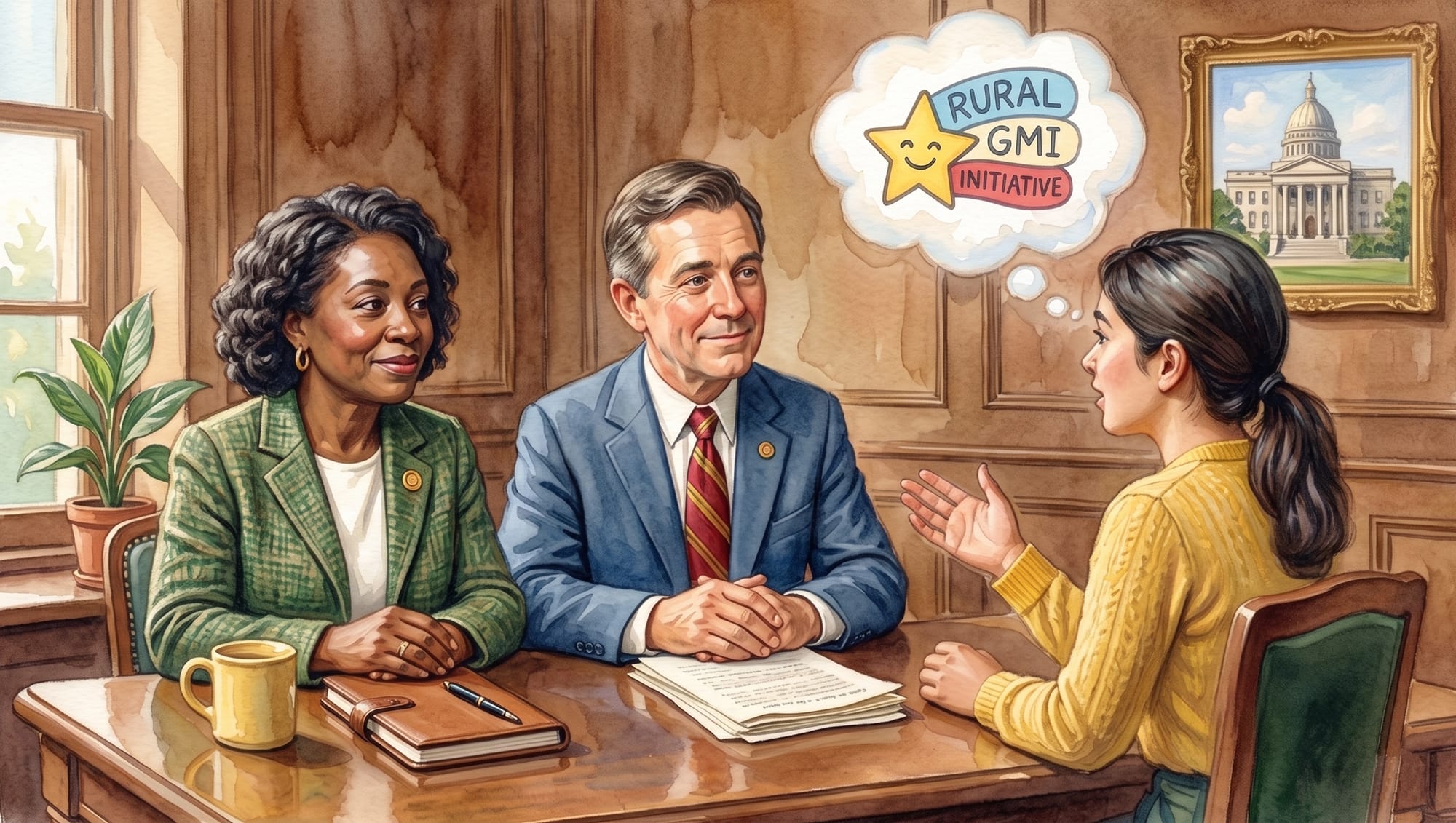
Start the conversation with something simple:
Families are struggling to keep up with basic costs. Programs like guaranteed minimum income give struggling families the breathing room to stabilize before small challenges spiral into crisis. I want you to support direct cash assistance programs in our state — prioritize rural counties, where poverty is especially challenging.
Finally, if you have the means, become a donor. If not, ask people you know who have been very fortunate, and have substantial resources, to learn more. Financial support helps us reach more families, fund research on economic mobility, and launch in more rural counties, perhaps reaching all 50 states in time.
Thank you for being a friend.
Let’s Take Action Together
- Share a link to GMI history, GMI studies, or what GMI is
- Start one conversation about GMI or direct cash transfer
- Contact one representative about GMI or direct cash transfer
Lasting public change starts when one person decides that this is worth sharing — and helps someone understand why it matters to them. That person can be you. 💛
Become a donor
 Jeff Atwood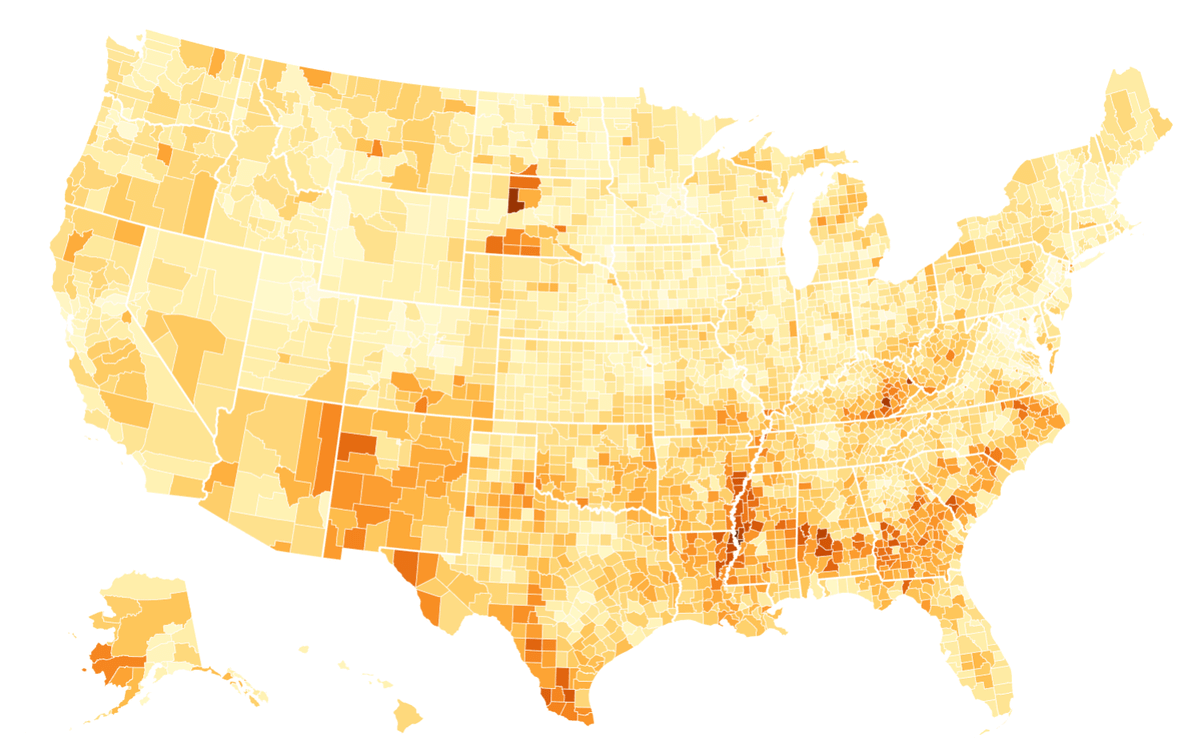
Do you know someone with the resources or influence to help expand this work? Tell them about us. Strong supporters, donors, and community leaders will play a major role in establishing guaranteed minimum income for everyone in poverty.