


After announcing the RGMII program on February 3rd, we listened closely to all feedback and discussions. We’ve compiled this initial set of Frequently Asked Questions that we hope to improve together.
- Do GMI payments cause a benefits cliff?
- Why not Universal?
- How do you prevent abuse?
- Why rural?
- What about future funding?
- Will people stop working?
- Won’t these counties still be stuck in poverty?
- Is democracy still working in rural America?
- What can I do?
Do GMI payments cause a benefits cliff?
RGMII cash is not tied to income, so if a participant works more, they make more. As income increases, families may reach a “Benefits Cliff” and lose eligibility for other benefit programs:
- SNAP guidelines suggest a $3,000 asset limit, but 36 states have either removed or raised this limit
- Supplemental Security Income (SSI) limits couples to $3,000 and individuals to $2,000 in savings
- Social Security Disability Insurance (SSDI) limits most individuals’ Substantial Gainful Activity (SGA) to $1,690 per month
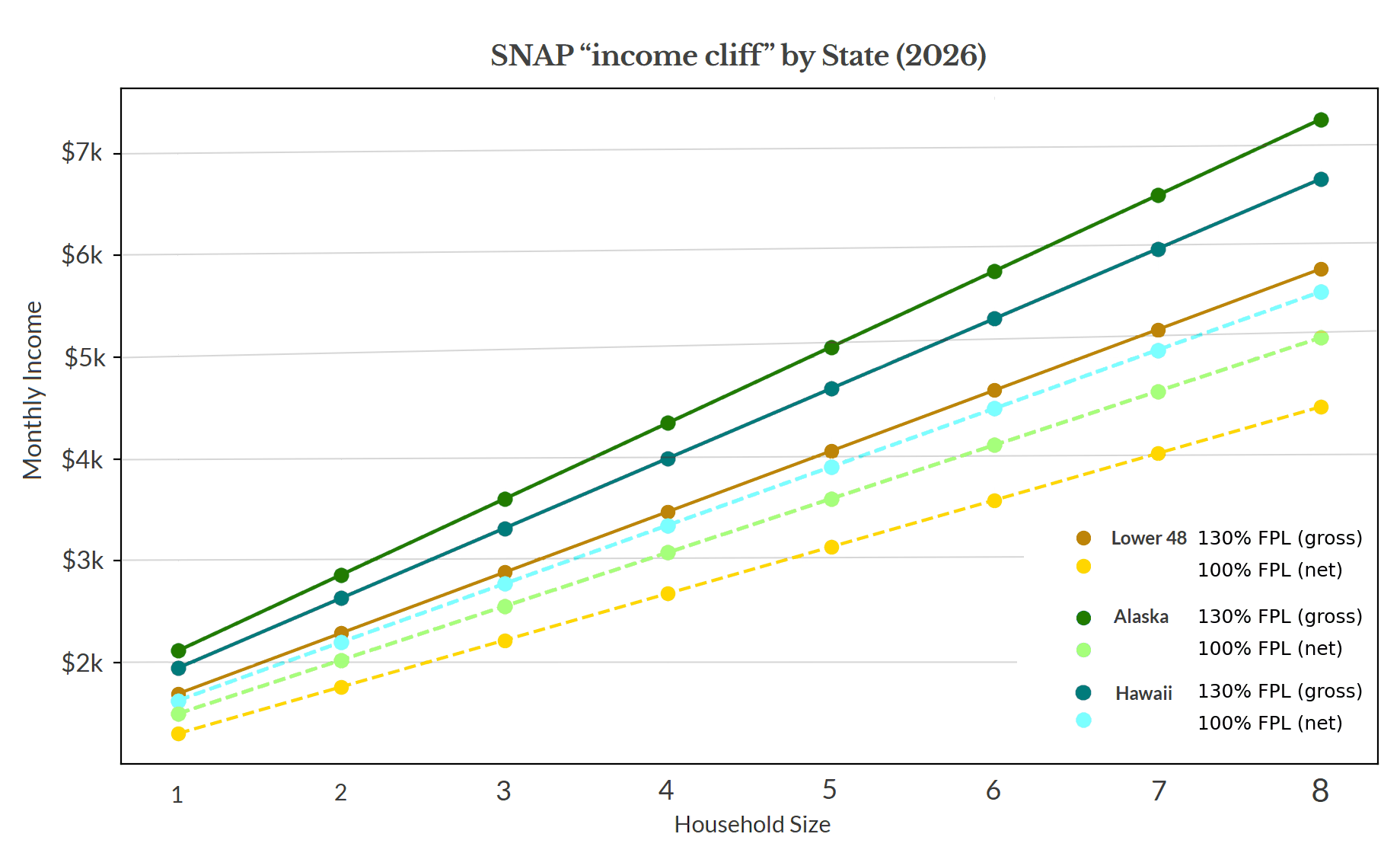
Some programs use “Hold Harmless” state waivers, which exclude GMI transfers from total income, to protect benefits. GiveDirectly seeks these waivers whenever possible, and provides benefits counseling so participants know about any potential impact on their existing benefits and can choose what works best for them.
⬆️ TopWhy not Universal?
Universal Basic Income (UBI) is simpler, but less effective — Guaranteed Minimum Income directs a limited set of funds to those families and communities with the most need. Methods for determining eligibility or “means testing” depend heavily on the implementation.
Many benefit programs rely heavily on third-party data and contractors to verify eligibility:
- Deloitte has at least $6 billion in contracts for Medicaid eligibility systems
- Equifax earned over $2.17 billion from services to verify income, employment, and educational history for their customers, including state and federal agencies
- Maximus earned $1.76 billion confirming requirements for state and local programs in their “U.S. Services” division
UBI implementations often assume efficient eligibility testing is not possible due to the so-called “means-testing industrial complex”:
- Federal and state agencies often pay Equifax multiple times for the same data. For example, if you apply for SNAP, Medicaid, and housing assistance simultaneously, all three of those agencies must pay Equifax to verify you.
- States encourage Maximus and Deloitte to focus on speed rather than accuracy, leading to families being accidentally kicked off Medicaid and CHIP due to technical errors in their renewal systems, and going without.
- Administrative cost to enforce “gatekeeping” rules can be substantial. For example, in Georgia’s Pathways to Coverage programs, over $54 million dollars — nearly 90% of its federal budget — went toward administration, IT systems, and consulting fees from Deloitte.
RGMII does not contract with any external means verification services. GiveDirectly personally verifies all dimensions of program eligibility, drawing on more than 15 years of experience delivering large-scale cash programs in the U.S. and internationally. By using a streamlined, low-overhead model, 85% of RISE RGMII funding is paid directly to recipients.
⬆️ TopHow do you prevent abuse?
The data does not support the existence of widespread abuse.
- SNAP fraud is 1.5 to 2% of benefits, while administrative errors ("Improper Payments") account for almost 11%
- Of the $600 billion Medicaid budget, only $1.4 billion is fraud — a tiny fraction of a percent, primarily by the providers
- Recent state-level audits found just 0.5% to 1.5% recipient fraud rate for programs like TANF and SNAP
The Government Accountability Office estimated that intentional fraud across major federal assistance programs accounts for less than 2% of total benefits.
Despite this data, benefits programs tend to prioritize enforcement, with multiple complex layers of auditing and administration, usually at considerable expense. Politicians sometimes campaign on increasing enforcement,
Focusing so heavily on the prevention of abuse can cost more than the abuse itself. It also fosters a culture of distrust and stigma where you must constantly prove you are needy “enough” to qualify. Some are so ashamed they don’t even bother to apply.
RGMII only asks for simple, minimal documentation — enough to verify household income and residency. Systems that trust the people they help are not only more efficient, but also more effective, because participants return trust by engaging in good faith.
⬆️ TopWhy rural?
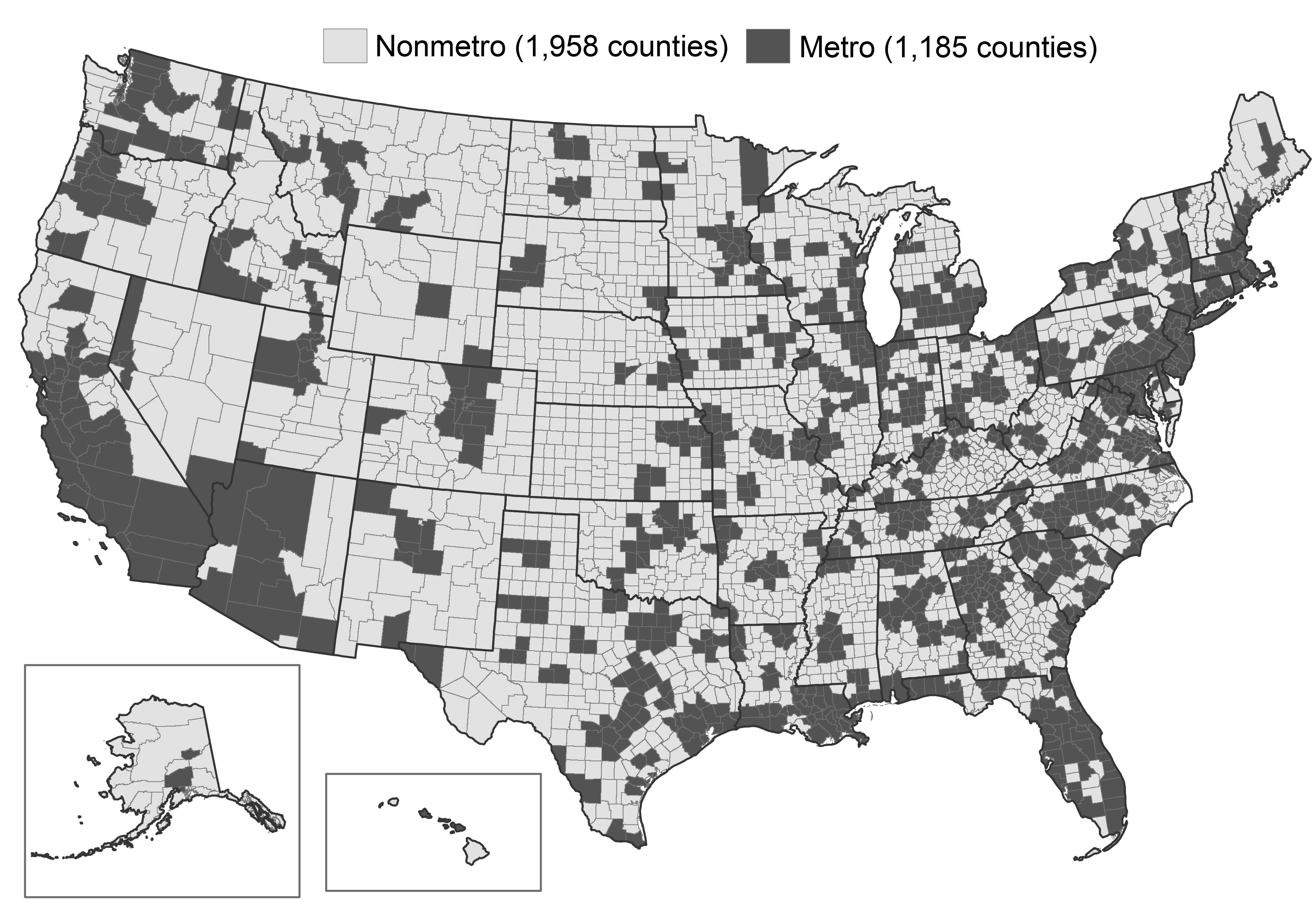
The total count of people in poverty is indeed higher in cities, because over ~86% of the US population lives in metropolitan areas.
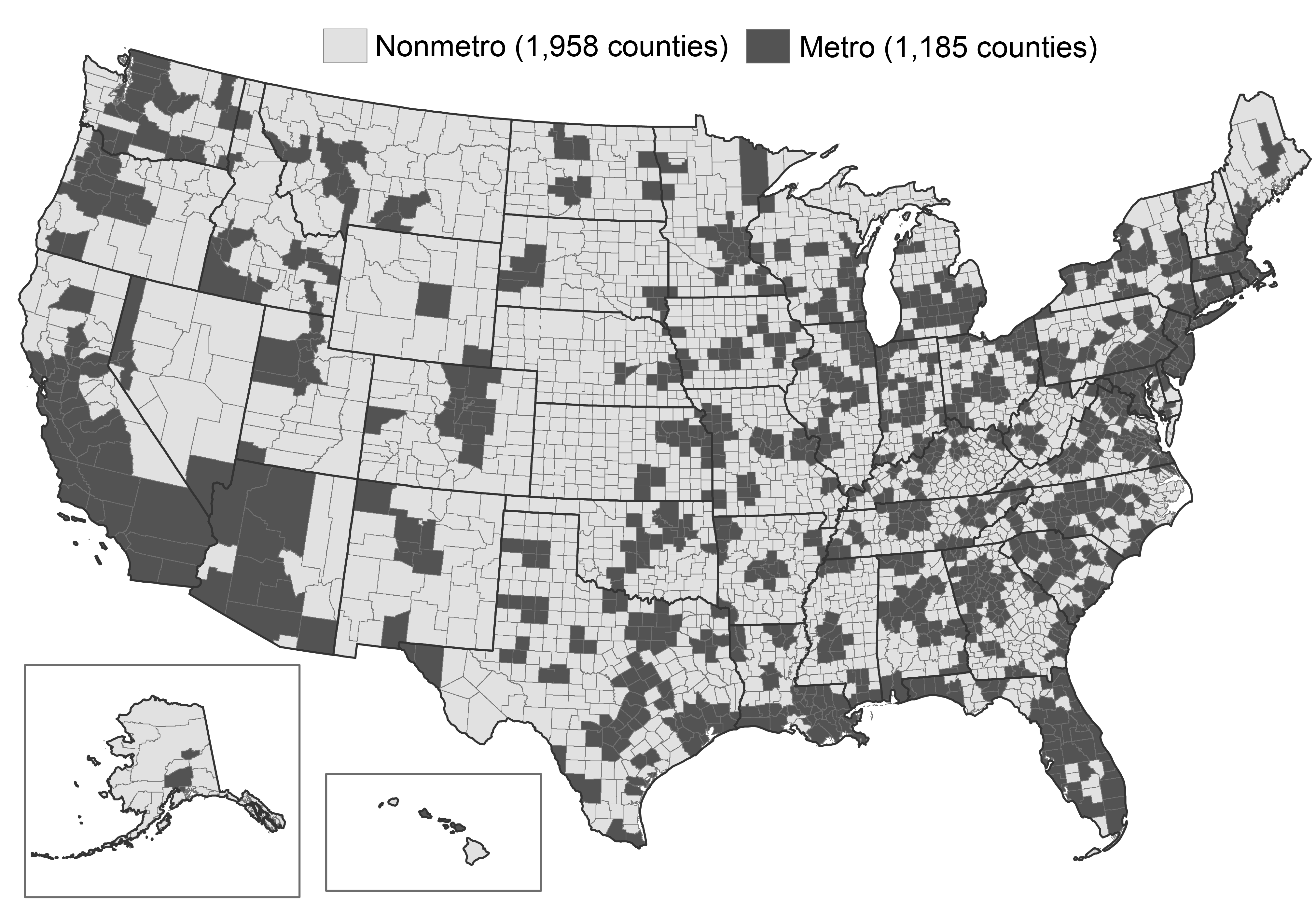
But numbers alone do not tell the full story:
- A person living in a rural area is statistically much more likely to be poor than someone in an urban area. Poverty in rural areas is 3.5% higher, often much higher for some demographics.
- Large cities offer well established and well funded social services, more healthcare options, more educational and vocational opportunities including robust existing infrastructure such as public transit. Rural areas have fewer options, and they are more difficult to reach.
In rural counties, a lack of money makes it much more difficult to deal with unexpected expenses — 37% of adults can’t cover $400 for an everyday problem such as their car breaking down, a medical emergency, or a giant storm.
Urban areas get lots of attention and support, but more than 60% of all counties in the United States are rural. Shouldn’t all of America have the same kind of basic support and essentials?
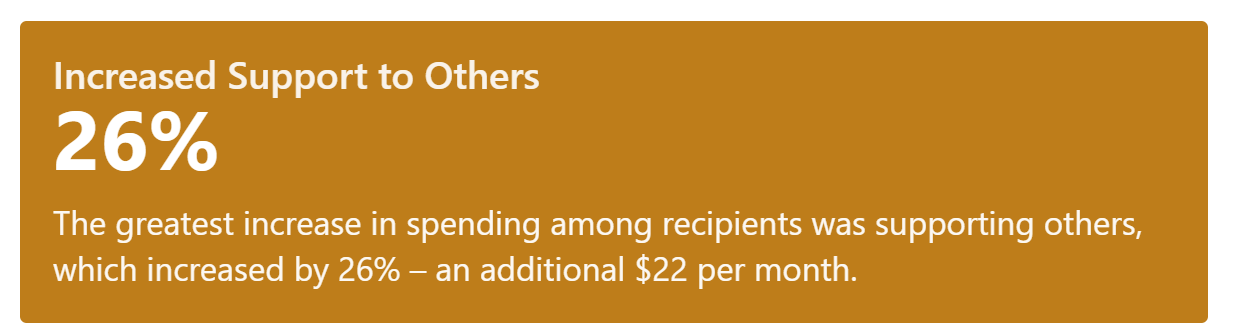
Furthermore, studies show that recipients consistently share GMI money with their friends, families, and neighbors, investing in their own community, and strengthening economic connections between nearby counties.
⬆️ TopWhat about future funding?
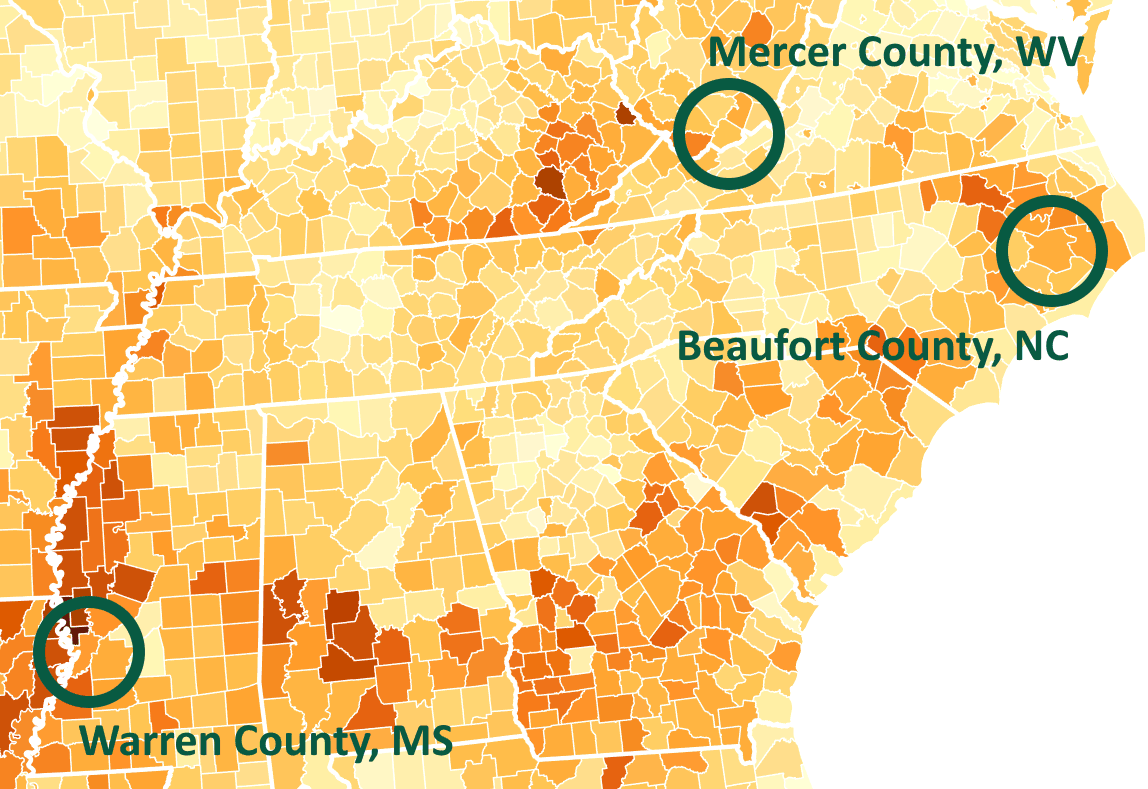
We’re starting with studies in 3 rural counties (Mercer County, WV, Beaufort County, NC, and Warren County, MS) to show that GMI is effective. Our goal is to strengthen and support existing structures in the county — veterans organizations, communities of faith, local businesses, and neighborhood groups.
Every county is unique in its own way. We’ll share everything we learn, with full transparency as equal partners, to become more efficient and more effective as we go, reaching as many rural counties as possible — where funds go a lot further and we can help more people.
All data from our studies become part of the global UBIdata repository, so everyone benefits. We hope this new data will continue to show that direct cash transfers are simple and effective.
⬆️ TopWill people stop working?
If provided additional income, will those in poverty stop working? Almost no data supports this:
- In the Stockton SEED demonstration, participants actually increased their full-time employment rate from 28% to 40% over a single year, compared to a 5% rise in the control group.
- OpenResearch Unconditional Cash Study recipients only decreased their work roughly 15 minutes per day or 1.3 hours — often using that time to take care of children, address health issues, or make employment transitions.
Guaranteed Minimum Income helps people get back to work:
- Transportation — Tamara repaired her car. This helped resolve long-standing issues, such as the anxiety of being unable to reach job interviews or manage daily responsibilities for her three daughters.
- Childcare — Rochelle prioritized being emotionally present for her children after GMI money allowed her to choose a lower stress job.
- Career Growth — Chelsea was a worker stuck in a dead-end job and used the financial cushion to switch careers. The cash helped her enter grad school and opened doors to better jobs.
- Starting a Business — Yasmin found it difficult to take professional risks without financial stability. Guaranteed income gave her the steady floor she needed to focus on her skills, and allowed her to start a financial services business.
Studies show that recipients use direct cash transfer for their most basic needs — food, rent, transportation, and financial support to their friends and family — creating a powerful economic multiplier effect. Unlike tax breaks for large corporations which may be saved or invested elsewhere, cash given to low-income rural residents is spent almost immediately and locally.
- When a participant uses GMI funds to repair their car at a local mechanic or buys extra groceries at the local store, that money becomes income for a neighboring family.
- Research on SNAP benefits shows that every dollar injected into a local economy generates $1.50 to $1.80 in local spending at nearby businesses. Rural economies are often “closed loops,” so GMI money circulates within the county. Prosperity trickles up.
When we invest in each other, we share hope and possibility that some may have never known. We share the American Dream.
⬆️ TopWon’t these counties still be stuck in poverty?
Generational poverty is not something that can be fixed in a few years — but a Guaranteed Minimum Income allows progress. Data shows that GMI recipients used this period of trust to move beyond survival and begin planning:
- 43% more likely to pursue job training
- 15% more likely to plan for further education
- Savings grew by 35%, with 24% more able to handle emergencies using their own funds
Participants know the program is temporary, but that window of safety and financial security provides them the agency to make better choices — like moving to a safer neighborhood or finding a better job — building a stable foundation for their lives that lasts far beyond the cash itself.
⬆️ TopIs democracy still working in rural America?
People living in rural areas are statistically much more likely to be poor than those in urban areas, and people in poverty often feel there is a focus on cities that passes them over, and no longer feel that democracy is for them. Lack of voting encourages politicians to focus even less on their needs and the cycle continues. Politicians often don’t even attempt to connect with working-class people in rural areas.
However, a healthy democracy needs rural people in poverty to believe their vote counts, and that they count. Financial stability fuels participation. An NBER study found that children from low-income families who received cash transfers were 10% to 20% more likely to vote as adults. The path out of poverty is also a path to the ballot box. When people have a stake in their future, they fight for it.
The demographics of rural areas are changing rapidly, and many counties are growing younger, especially with housing price pressures in larger urban areas. A renewed focus and commitment to rural areas can accelerate that change, and represent more folks who want to feel heard in our democracy.
Our goal is to provide detailed, proven rural GMI playbooks along with extensive study data showing that GMI works. Politicians can run on GMI policies that win hearts, minds... and elections.
⬆️ TopWhat can I do?
Spread the word! Participate in GMI conversations in your own communities, both on-line and in the real world. Ask questions, find answers, educate, explain, point the curious or the doubtful back to this page. There is an astonishing amount of evidence that direct cash grants work, but almost no politicians even mention the idea. Why?
⬆️ Top