


Two excellent new reports from our friends at the Economic Security Project make a strong case for direct cash — and reveal why rural, county-level research matters.
Right on Time argues that cash is particularly effective during major transitions:
- having a child
- losing a job
- leaving foster care or incarceration
- taking on caregiving responsibilities
- moving
- recovering from a disaster
These are common moments when a temporary financial shock can easily become a lasting crisis. Timely cash can keep a car repair from becoming job loss, missed rent from becoming eviction, or a family emergency from becoming permanent debt.
Putting Cash in Parents’ Pockets asks how that evidence can become policy. It proposes using existing authority under TANF, Medicaid, child-welfare funding, and consumer-protection law to reach families without waiting for Congress to become functional.
But these reports also illustrate a problem with how cash transfers have typically been studied: Cash is not location-neutral. Neither is the amount.
The wrong amount can produce the wrong conclusion
ESP’s policy report notes:
“Cash assistance needs to be substantial enough to make a real difference in a family’s life.”
ESP illustrates with Baby’s First Years, a large randomized study that provided families with $333 per month, and found limited effects on several broad measures of family wellbeing. But ESP notes that several of the study’s own authors believe the payment was probably too small to overcome the affordability crisis families were facing. The cash did increase the time and money parents spent on their children, but it did not provide enough financial force to change many of the larger outcomes being measured.
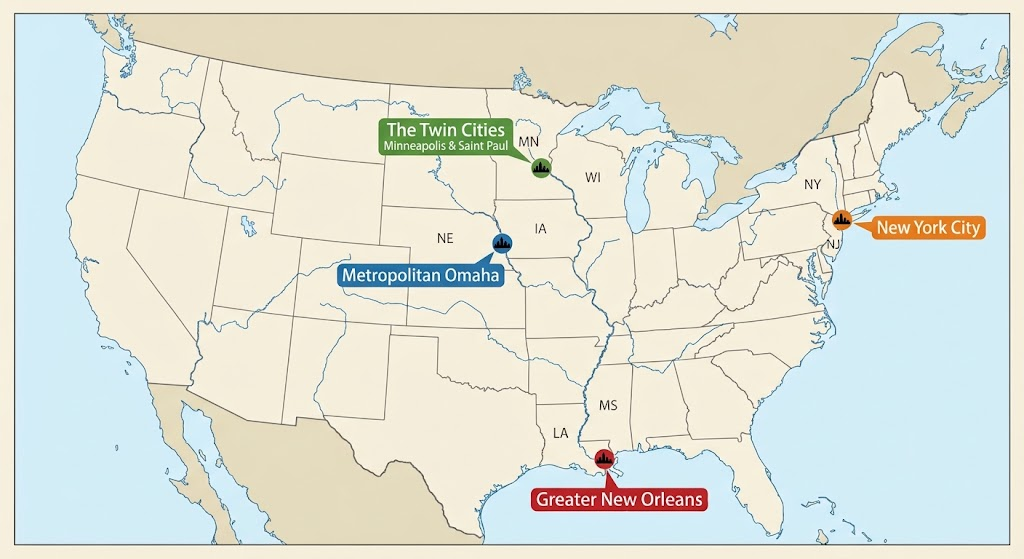
That study took place in four urban areas: New York City, greater New Orleans, the Twin Cities, and metropolitan Omaha. The $333 was not sent to the wrong families – but it may have been too small to make broad changes relative to costs of living in those four metropolitan areas.
| Monthly cost covered | BFY metro areas | RGMII rural counties |
|---|---|---|
| Housing alone | 12.3–25.0% | 34.8–37.0% |
| Child care alone | 20.5–46.1% | 41.8–64.2% |
| combined | 8.0–16.2% | 19.3–22.5% |
A payment that cannot cover a meaningful share of housing, child care, transportation, or other basic costs does not change the choices available to a family. A larger payment, or the same payment in a place with different incomes, housing markets, and costs can give families substantially more room to act.
“Does cash work?” isn't the right question. We know cash works. But how much cash, delivered when and how often, in which places relative to local incomes and costs?
Early evidence points to larger rural effects
The evidence directly comparing rural and non-rural recipients is limited, but what exists is notable.
OpenResearch’s Unconditional Cash Study provided $1,000 per month for three years. Its exploratory rural analysis included 307 participants who remained rural during the study. Among those participants, the cash increased homeownership by 8.5 percentage points, while producing no measured homeownership effect among non-rural recipients. Rural recipients also experienced improvements in housing stability, physical-health limitations, psychological distress, and entrepreneurial interest that were weaker or absent in the non-rural sample.
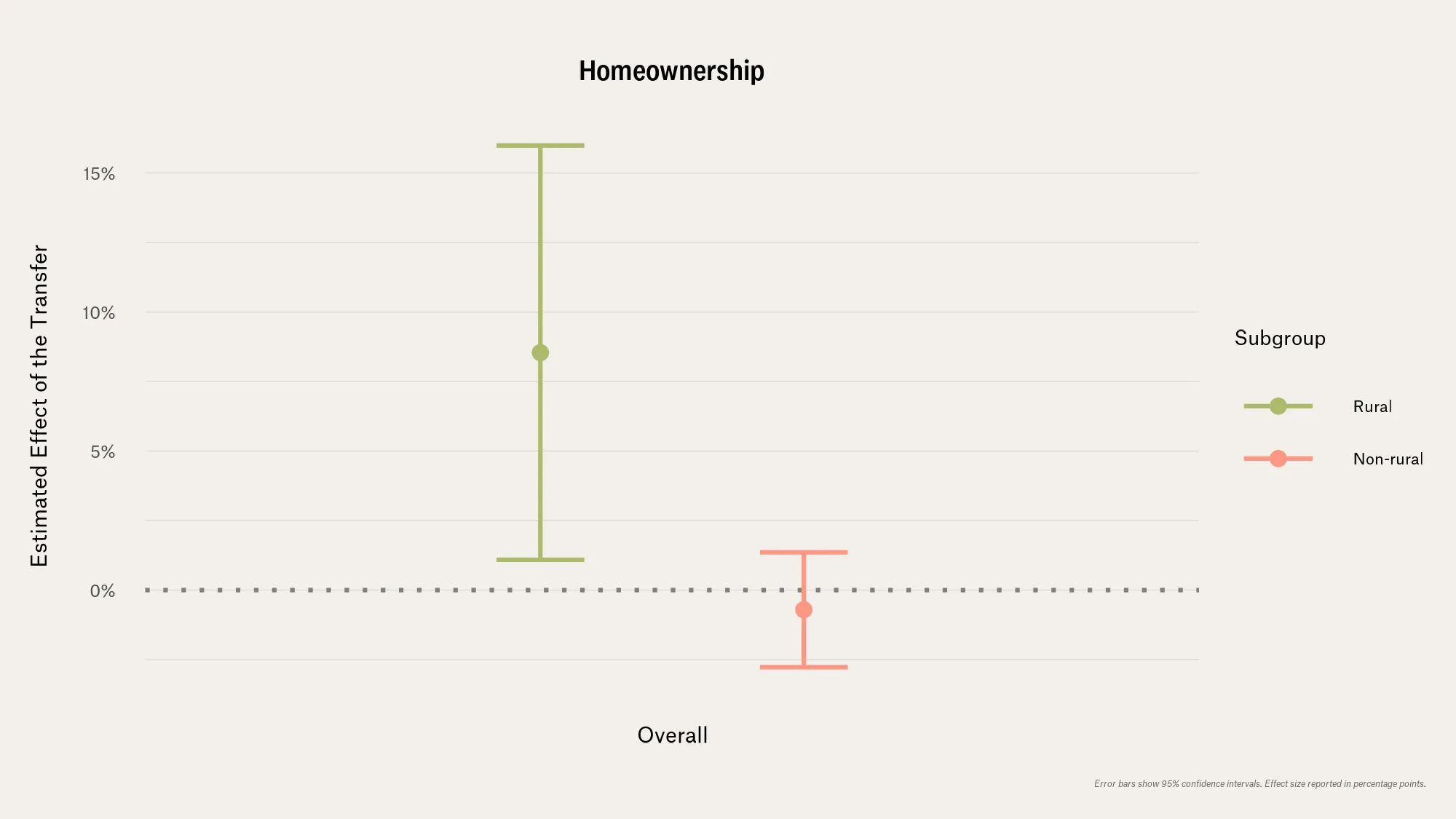
The sample was small and drawn from a limited number of counties in Texas and Illinois, and the results should not be treated as conclusive. But they are enough to challenge the assumption that the same payment has the same effect everywhere.
These findings support a clear, testable proposition: Substantial cash may produce outsized gains in rural communities because it can represent a larger share of household income and may put stable housing and homeownership within closer reach than they are in many metropolitan market.
That does not mean cash solves every rural problem. It cannot create a child-care provider, reopen a hospital, build broadband infrastructure, or produce public transportation where none exists. OpenResearch found no sustained overall improvement in rural transportation security, illustrating how structural shortages can limit what monthly cash alone can accomplish.
This is the question RGMII is positioned to answer
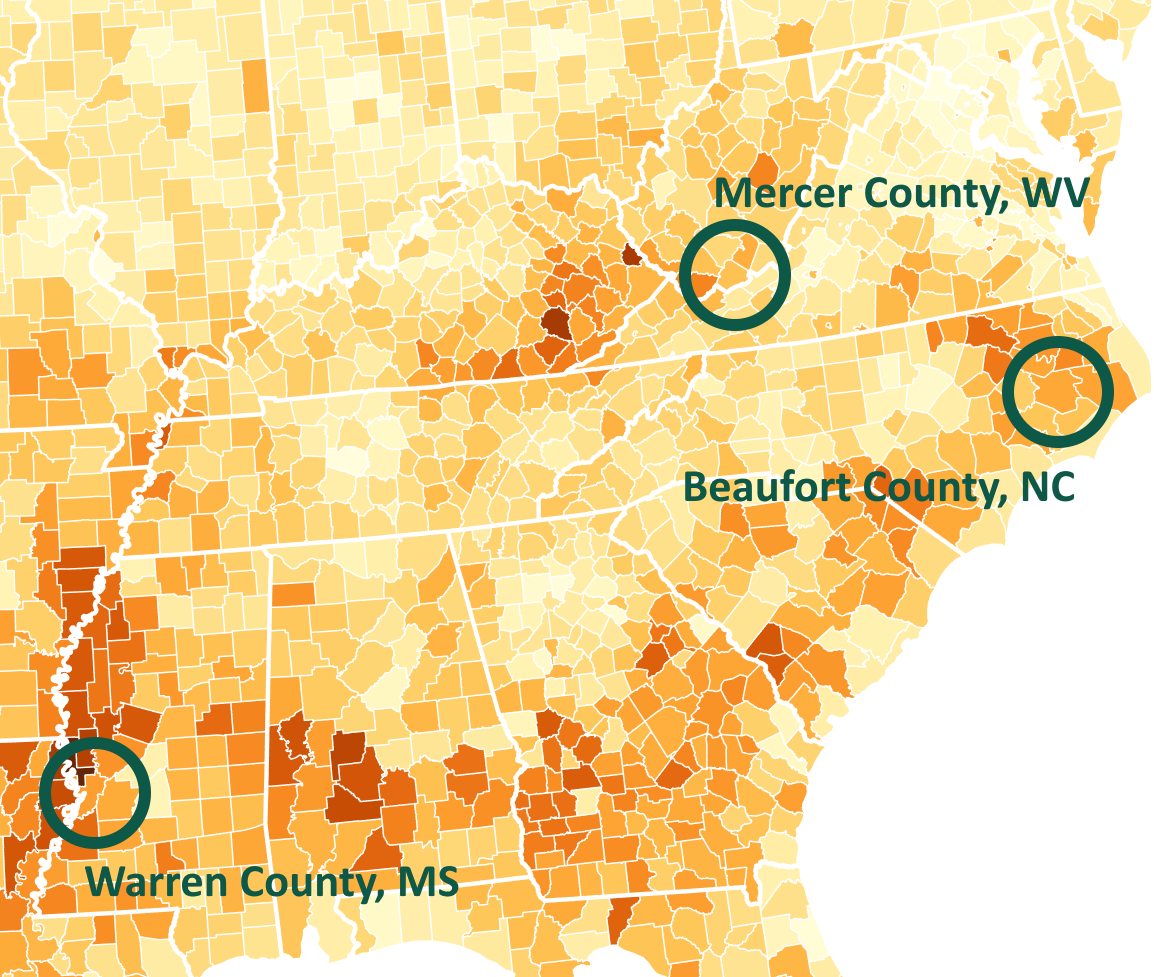
RGMII’s first programs provide $1,500 per month for 16 months to participants in Mercer County, West Virginia; Beaufort County, North Carolina; and Warren County, Mississippi.
That is not simply a larger version of the $333 payment tested by Baby’s First Years. It is a fundamentally different economic situation, because median existing monthly household income among RISE participants is $1,400:
- for 52% of participants the $1,500 transfer is larger than their entire pre-program monthly household income
- 67% of participants entered the program with no savings
- 83% of participants could not cover a $400 emergency
A payment of that scale has the potential to change the actual choices available to a household. It may make homeownership, debt reduction, a reliable vehicle, safer housing, caregiving, training, or a small business possible. The RISE research will help document when that happens, when it does not, and what local conditions explain the difference.
The current RISE research will not, by itself, prove that cash is more effective in rural communities than in urban ones. It is a descriptive study using surveys, interviews, and ethnographic fieldwork rather than a randomized rural-versus-urban comparison. But the study can document:
- what happens when substantial cash reaches rural households
- how participants’ circumstances change
- where the money produces durable gains over time
- where structural barriers remain
- how those patterns differ across counties
RGMII’s broader contribution is repeatability. The goal is not to treat three counties as representative of all rural America, but to build a better GMI playbook and research process in county after county, preserving local differences rather than pooling them away.
Nearly 90 percent of participants in the first three programs have voluntarily joined the accompanying research. That unusually high level of engagement makes it possible to combine large-scale county data with detailed accounts of how cash interacts with work, housing, transportation, health, caregiving, and family life.
From rural evidence to public policy
Data and human stories do not magically become policy. A study does not identify statutory authority, draft a Medicaid waiver, satisfy budget rules, recruit state partners, survive legal review, and emerge as a benefit families can actually receive. That is the difficult work of turning evidence into policy.
ESP’s contribution is taking that policy machinery seriously and finding ways to make progress in an extremely challenging political environment. Its agenda proposes :
- using TANF authority to provide cash around childbirth
- creating a Medicaid waiver pathway for prenatal and infant cash
- using child-welfare prevention funding when poverty is driving the risk of family separation
- using competition and consumer-protection authority to address price gouging on early-childhood necessities
The Medicaid proposal is particularly relevant to rural America because Medicaid finances nearly half of births in rural communities. The delivery infrastructure already reaches families during one of the transitions when substantial cash may be most useful.

RGMII and ESP bring two distinct but complementary roles to that work:
- RGMII and its research partners can produce valid, repeatable rural evidence: county-level data, comparisons across places, implementation lessons, and participant-controlled stories.
- ESP can translate well-supported findings into policy design: waiver models, agency guidance, legislative language, funding pathways, coalition strategy, and the political work required to move an idea through government.
The relationship should operate as a loop. Policy questions should help shape future research. Research should show policymakers where apparently elegant proposals collide with rural geography, limited infrastructure, administrative burdens, or benefit rules.
Rural America may be where cash has greatest leverage
The limited evidence already suggests that substantial cash may produce some of its largest gains in rural communities. What we do not yet know is how broadly those gains hold, which outcomes are most affected, and which county conditions make cash more or less powerful. That is the gap RGMII is working to fill.
- RGMII can document what happens when substantial cash reaches the rural households most in need and produce the county-level data, comparisons, implementation lessons, and human evidence needed to make rural America impossible to ignore.
- ESP has articulated the longer-term destination: policies that deliver meaningful cash through institutions capable of reaching families when they need it most. It can help navigate the agencies, statutes, waivers, coalitions, compromises, and political fights required to turn justified evidence into government policy.
The evidence that cash can help families, particularly at moments of disruption, is substantial. The question is not whether cash works. It is where, when, and at what amount it creates the greatest room for families to act.